







I have a virtual tour on my website and would like an audit.

I don't have a virtual tour yet, would love a demo to see how it works.

Virtual tours support modern university admissions by allowing prospective students to explore campus environments remotely, evaluate facilities in detail, and form early impressions without visiting in person. They extend campus access to international and out-of-state applicants, reduce logistical barriers, and provide admissions teams with a scalable engagement tool. When integrated into enrollment strategies, virtual tours enhance visibility, improve information delivery, and support informed application decisions.
Why Are In-Person Campus Visits No Longer Enough?
Traditional campus tours require travel, scheduling coordination, and physical attendance, limiting access for international students, working applicants, and families with financial constraints.
Admissions cycles have become increasingly global and competitive. Institutions receive applications from students across different regions and time zones. A single on-campus visit no longer serves the needs of digitally native applicants who expect immediate access to information. When campus exposure is restricted to physical visits, institutions risk excluding qualified prospects who cannot travel.
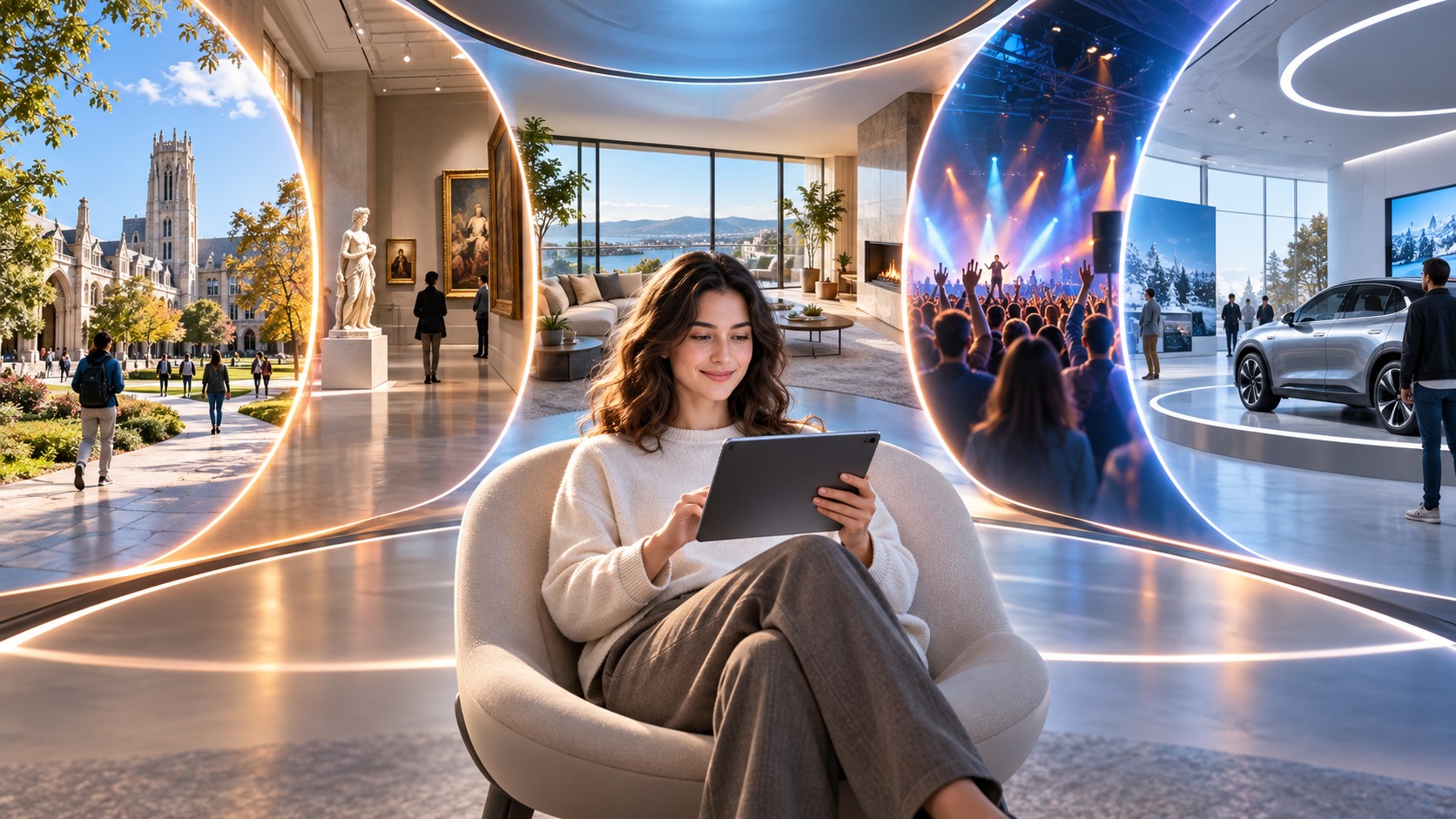
Universities can supplement physical tours with immersive 360° virtual tours that operate continuously online. These experiences allow prospective students to explore classrooms, residence halls, laboratories, libraries, and athletic facilities at any time. When paired with admissions content, program details, and student testimonials, virtual tours function as a first-stage evaluation tool before formal inquiries or applications.
How Do Virtual Tours Improve Applicant Engagement?
Static photos and text descriptions often fail to communicate campus atmosphere, scale, and layout effectively.
Prospective students assess more than academic programs; they evaluate environment, safety, culture, and overall fit. Interactive virtual tours provide spatial context, enabling viewers to move through real campus environments. Features such as clickable information points, embedded videos, or narrated walkthroughs offer layered information that supports deeper exploration.
Research in digital engagement consistently shows that interactive content increases time spent on a website. Longer engagement typically correlates with stronger institutional recall and higher inquiry rates.
Admissions teams can embed interactive 360° tours directly into admissions pages, program-specific landing pages, and email campaigns. Options may include narrated virtual tours for guided storytelling, custom virtual tours with branded elements, or 3D-modeled environments for high-detail exploration. The goal is structured exploration rather than passive viewing.
How Do Virtual Tours Expand Access for International and Remote Applicants?
Geographic barriers limit campus access for international students and out-of-state applicants.
International applicants often make enrollment decisions without ever visiting the campus. Virtual tours reduce uncertainty by allowing remote students to examine campus infrastructure, student housing, research labs, and recreational facilities. This transparency builds trust and supports decision confidence.
In addition, remote accessibility aligns with inclusive admissions practices. Students with mobility challenges or financial limitations benefit from digital alternatives that replicate key elements of a campus visit.
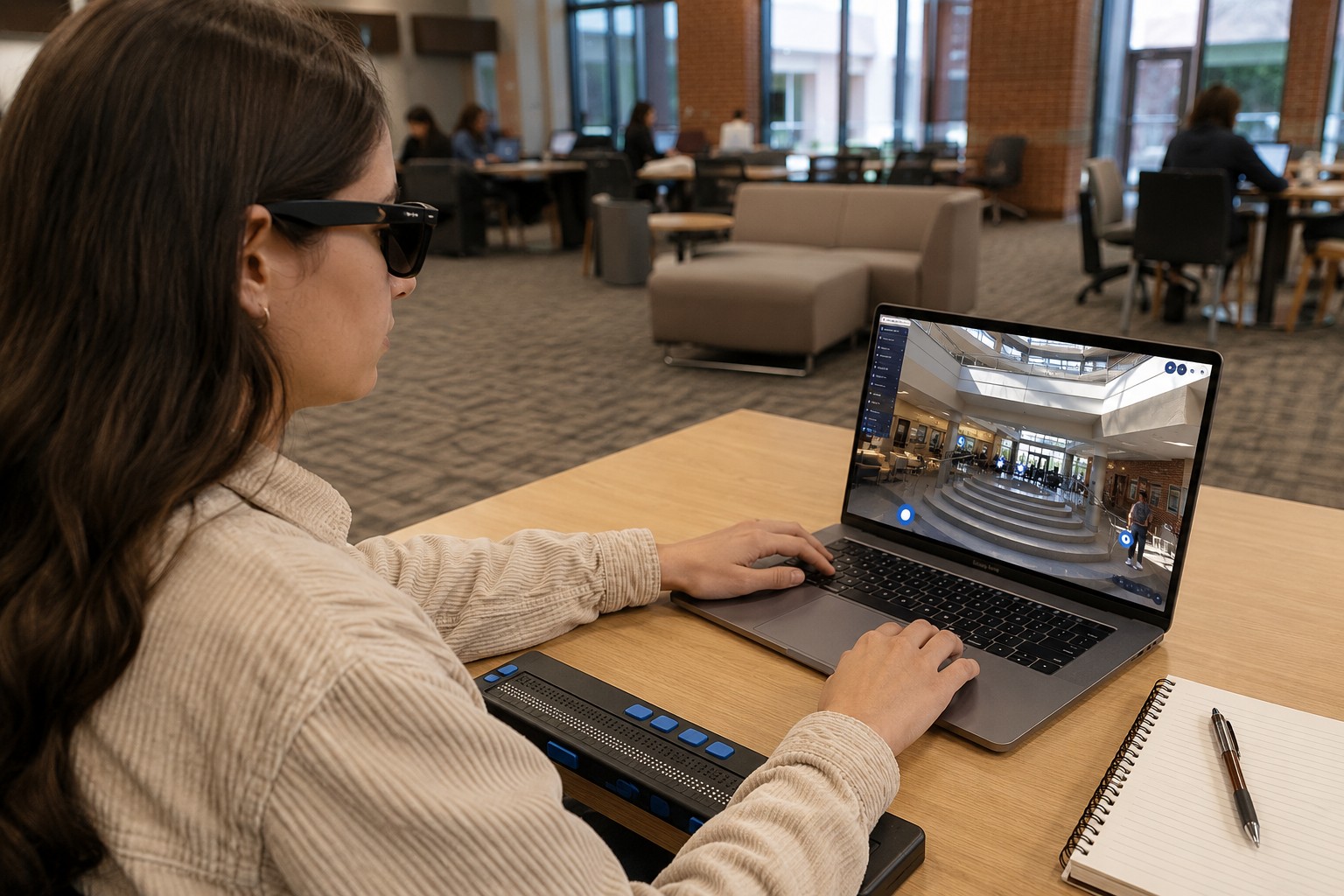
Universities can design tours that highlight services relevant to international students, such as international offices, student support centers, and campus safety features. Aerial drone visuals may provide broader campus context, while interior 360° tours deliver detailed facility views. Accessibility features, including captioned narration and mobile compatibility, should be considered standard.
How Do Virtual Tours Support Enrollment Marketing and SEO?
Admissions websites compete for visibility in search results and must differentiate their institutions online.
Virtual tours contribute to search visibility when integrated with optimized landing pages and structured content. Search engines prioritize engaging, high-value content that keeps users on-site. Interactive media often increases dwell time and reduces bounce rates, signaling relevance.
Additionally, integration with platforms such as Google Business listings can enhance institutional presence in local and branded searches. While tours alone do not guarantee ranking improvements, they strengthen overall digital engagement metrics.
Admissions teams should align virtual tour content with broader SEO strategy. This includes descriptive metadata, keyword-aligned headings, and clear integration within admissions pathways. Rather than isolating tours on standalone pages, embedding them within application guidance improves strategic impact.
How Do Virtual Tours Support Decision-Making During the Evaluation Phase?
Applicants often compare multiple institutions and struggle to differentiate campus environments through brochures alone.
The decision phase involves emotional and practical considerations. Seeing dorm layouts, lab equipment, campus green spaces, and classroom design can influence perception of institutional quality. Immersive visuals reduce ambiguity and help applicants imagine daily life on campus.
Virtual tours also provide consistent messaging. Unlike live tours, which may vary by guide, digital tours present standardized information aligned with admissions priorities.
Institutions can segment virtual tour experiences by audience type, such as undergraduate, graduate, or transfer students. Highlighting facilities relevant to specific programs/engineering labs, performing arts centers, and medical simulation spaces supports targeted evaluation.
What Do Institutions Commonly Misunderstand About Virtual Tours?
Some institutions assume virtual tours replace in-person visits or serve as a temporary substitute during disruptions.
Virtual tours function best as a complement, not a replacement. Another misconception is that basic photo slideshows qualify as immersive experiences. Poor navigation, outdated visuals, or limited mobile compatibility can reduce credibility rather than enhance it.
A further issue is failing to integrate tours into admissions workflows. When tours exist without connection to inquiry forms, program pages, or follow-up communication, their strategic value diminishes.
Universities should treat virtual tours as part of a broader enrollment ecosystem. Content updates, user testing, and analytics tracking are essential. Clear calls to continue the admissions journey, such as requesting information or scheduling a virtual information session, should be logically placed within the digital experience.
FAQs
Virtual tours complement in-person visits but do not fully replace the experience of being physically present on campus.
Yes, they provide remote access to campus facilities and reduce uncertainty for applicants who cannot travel.
Common formats include 360° interactive tours, narrated walkthroughs, 3D-modeled environments, and aerial campus overviews.
Interactive tours typically increase time spent on site and encourage deeper exploration of admissions content.
Yes, outdated visuals or inaccurate facility representations can undermine trust and decision confidence.
Conclusion
Virtual tours have evolved into strategic assets within modern university admissions. By expanding access, enhancing engagement, and supporting informed decision-making, they align digital experience with contemporary enrollment demands. When thoughtfully implemented, they strengthen institutional visibility and provide scalable campus exposure to a global applicant pool.
I have a virtual tour on my website and would like an audit.
I don't have a virtual tour yet, would love a demo to see how it works.