







I have a virtual tour on my website and would like an audit.

I don't have a virtual tour yet, would love a demo to see how it works.

A university looking for virtual campus tour providers should focus on how well a provider’s technology, content quality, user experience, navigation, and analysis tools align with institutional goals such as enrollment increase, engagement, and search visibility. The evaluation must also consider reliability, customization options, and the ability to present genuine campus experiences.
Can Universities Solve Problems with a Virtual Campus Tour?
Universities usually seek virtual campus tours to address multiple enrollment, engagement, and marketing challenges:
- Geographic barriers: Prospective students may be located across regions or around the world, making in‑person visits impossible and costly.
- Limited recruitment resources: On-site teams may lack the capacity to host large numbers of individual tours.
- Digital first impressions: Universities need rich digital experiences that reflect campus culture, rather than relying on simple photos or text.
- Search visibility: An engaging virtual presence can contribute meaningfully to metrics growth and search engine visibility.
To solve these, a virtual provider must deliver practical experiences that depict a genuine campus environment, informed choices, and the university’s digital ecosystem.
What Core Features Should Be Evaluated in a Virtual Campus Tour?
Immersive Navigation and Realistic Coverage
The base of a virtual campus tour is the ability for online visitors to explore spaces smoothly. Evaluation should determine whether the tour technology:
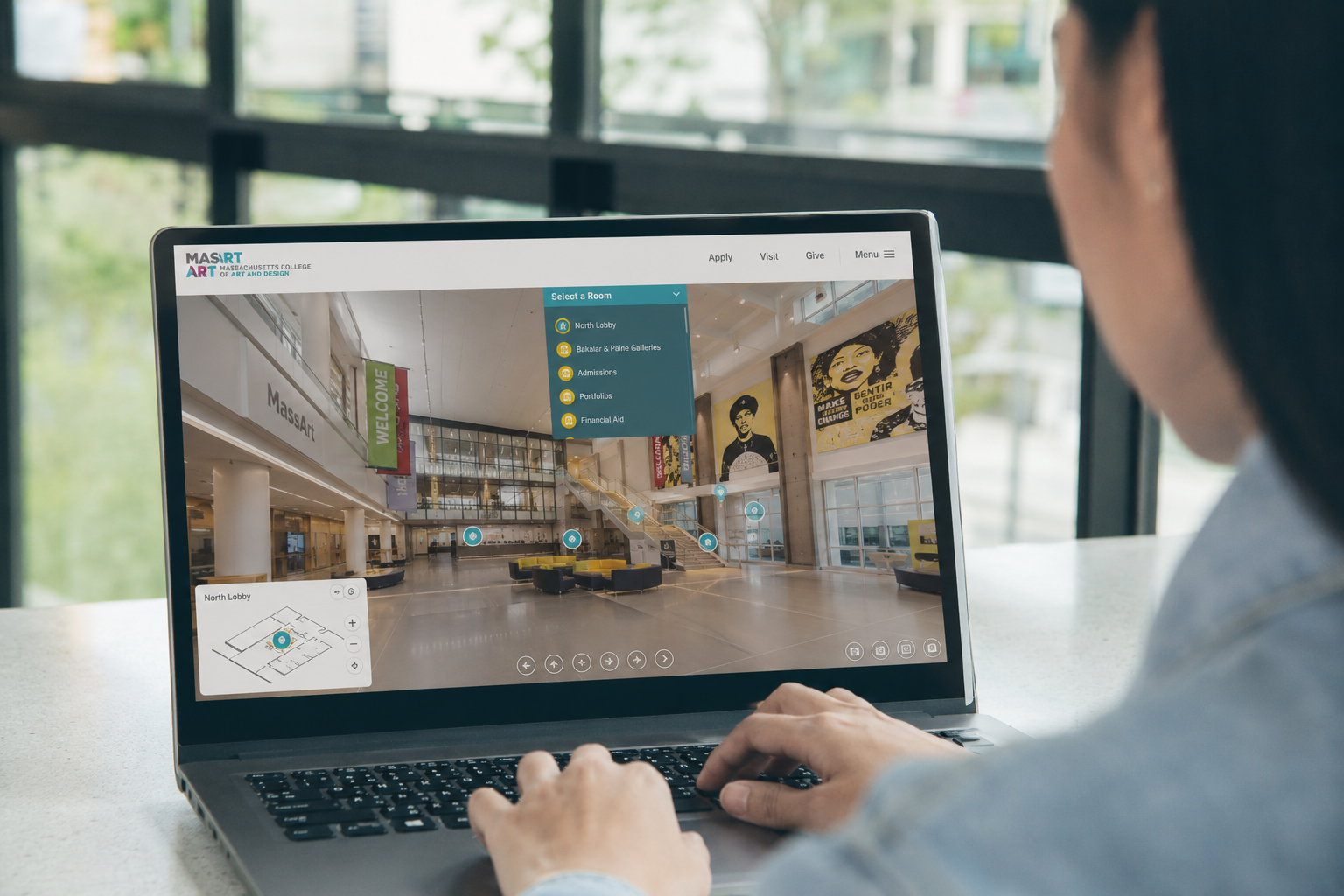
- Provides 360‑degree panoramic views of campuses, common areas, academic buildings, residence halls, and amenities.
- Offers seamless navigation that mimics walking pathways rather than a static slideshow.
- Includes interactive elements such as trivia, hotspots, and info popups that enhance the virtual experience.
Content Depth and Informational Quality
A major differentiator is not just how users move through a tour, but what they learn:
- Information pop-ups that explain academic facilities, student services, or housing. An optional narration or audio tour guide that connects places and tells a full story.
- Integration of multi‑media elements like embedded videos, photos, or faculty introductions.
High‑quality content supports enrollment decision-making by delivering depth beyond visuals alone.
Customization and Brand Alignment
Universities have their own identities, and tour providers must:
- Provide customization of colors, logos, and thematic elements to match institutional branding.
- Allow storyline structuring around key selling points such as campus culture, research strengths, campus logistics, or community engagement.
- Support modular design so tour content can be updated or expanded.
How Important Is Integration With Search and Digital Marketing?
A virtual campus tour should do more than look good; it must contribute to visibility and discoverability:
- Leverage platforms such as Google Street View or other virtual tour frameworks that feed into search results and knowledge panels.
- Improve on‑page engagement metrics, reducing bounce rates and increasing time on site, factors that search engines may interpret as relevant signals.
- Integrate cleanly with university CMS and social platforms so that tours are easily shared across admissions emails, social media, and campaign landing pages.
What Implementation and Support Capabilities Matter?
Reliability and Technical Delivery
Tour technology must perform predictably across devices and environments:
- Tours should be mobile responsive, ensuring seamless experiences on phones, tablets, and desktops.
- Optimizing screen loading time, especially in regions with slower internet.
- Clear processes for updates and maintenance, since static tours may become outdated as campuses evolve.
Analytics and Performance Tracking
A critical but often overlooked evaluation area is nanalyica nd KPI metrics:
- Can the provider deliver an analytics heatmap that shows user engagement, user journey, and drop‑off points?
- Are there conversion tracking tools that attribute inquiry form submissions or applications to tour interactions?
- Does the provider support A/B testing of tour versions to benchmark changes?
Mistakes Universities Make When Choosing a Virtual Service Provider
Mistaking Visual Appeal for Educational Value
Universities commonly assume that a visually attractive tour will automatically appeal to prospective students. Without content that answers key questions about courses, campus life, or campus logistics t, the tour remains incomplete.
Ignoring Technical and Accessibility Standards
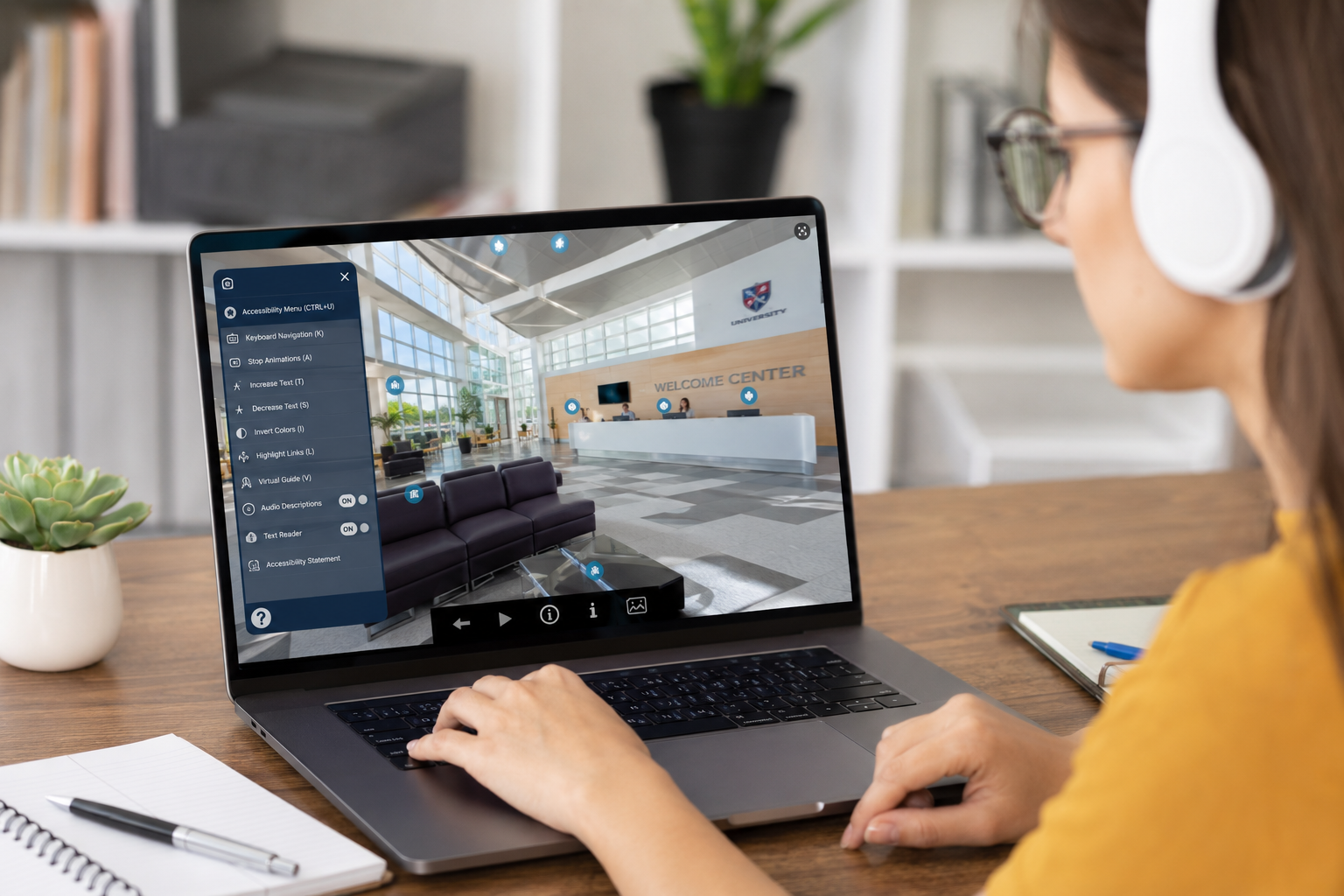
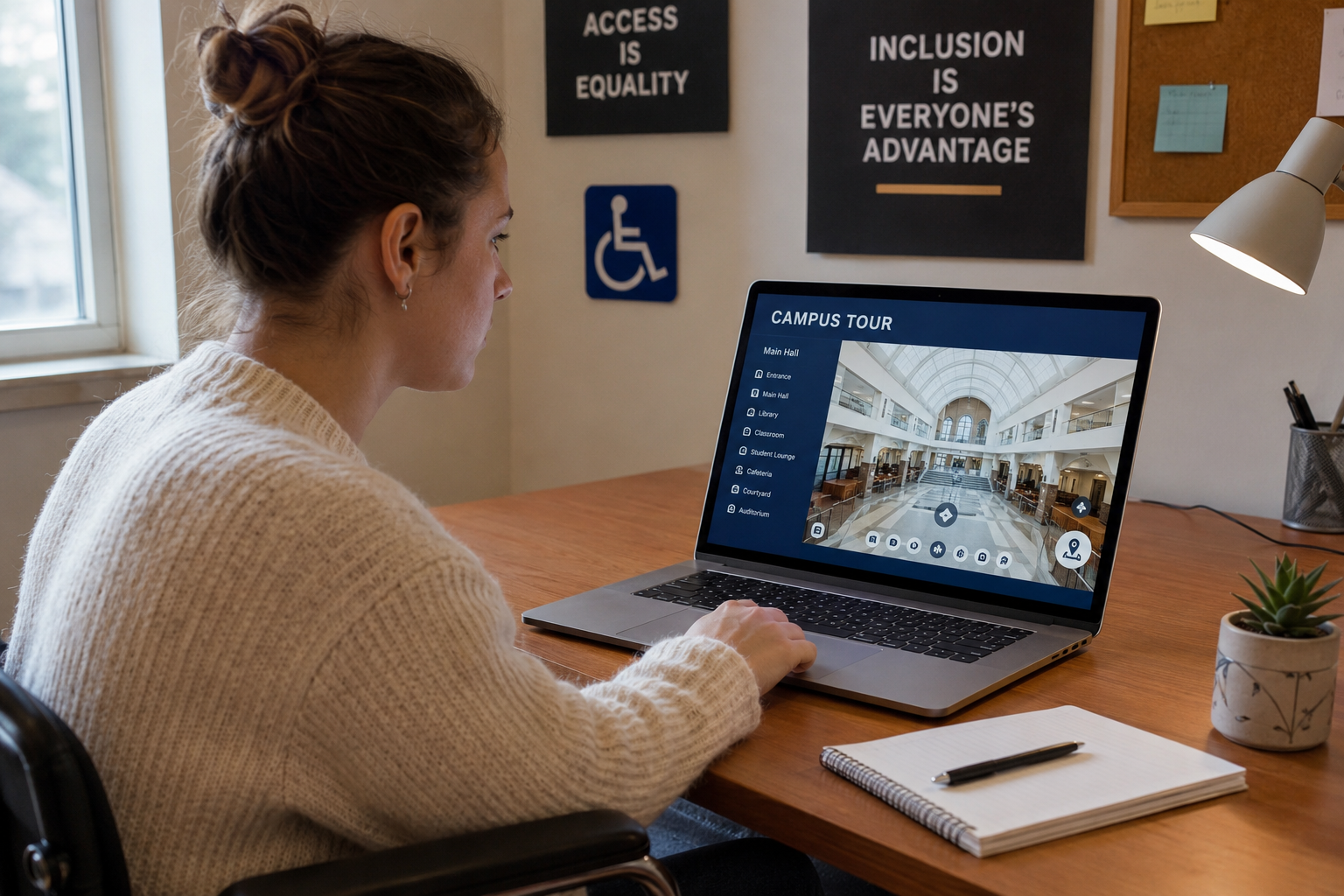
If tours are not fully engaging or fail navigation standards (e.g., keyboard navigation, screen reader support), a big part of prospective audiences may be excluded. Tours must be designed with accessibility in mind, not just visual appeal.
Overlooking Analytics and Measurement
Choosing a virtual partner without a good record means universities cannot convert the impact. Without data on the user journey and conversion map, it is difficult to justify investment or ROI.
FAQs
A 360‑degree tour focuses on visual navigation, while a narrated tour adds audio guidance that explains context and highlights key features.
Yes. Interactive tours indexed in search platforms can enhance engagement metrics, which support broader visibility goals.
No. They can be integrated across academic program pages, housing sections, and alumni communications to reinforce brand and recruitment efforts.
They complement rather than replace in‑person visits by offering an accessible first impression that informs whether an on‑site visit is worthwhile.
Analytics reveal how visitors engage with the tour and whether it contributes to desired outcomes such as inquiries, applications, or event registrations.
I have a virtual tour on my website and would like an audit.
I don't have a virtual tour yet, would love a demo to see how it works.