







I have a virtual tour on my website and would like an audit.

I don't have a virtual tour yet, would love a demo to see how it works.

Prospective students and their families can easily tour university campuses from a distance with virtual tours. This makes it simpler to comprehend campus spaces and how they connect by removing the problems of distance, mobility, and travel time. These interactive experiences allow prospects to feel more at ease, informed, and confident about their campus choices, even before landing on campus.
Challenges Do Universities Face Without Virtual Tours?
Universities find it difficult to give a true picture of their campuses without virtual tours. There are few static images and brochures that depict how areas are connected or how simple it is to move around. Prospective students who wish to comprehend the campus layout prior to visiting may find this frustrating. Some students with mobility issues or those who are unable to travel might feel left out of the process if they are unable to explore digitally.
Families and distant learners also frequently lose out on the full campus experience. When making decisions, their inability to assess the campus’s accessibility and ease of use can be a deal-breaker.
Virtual Tours Make Campus Tours More Inclusive?
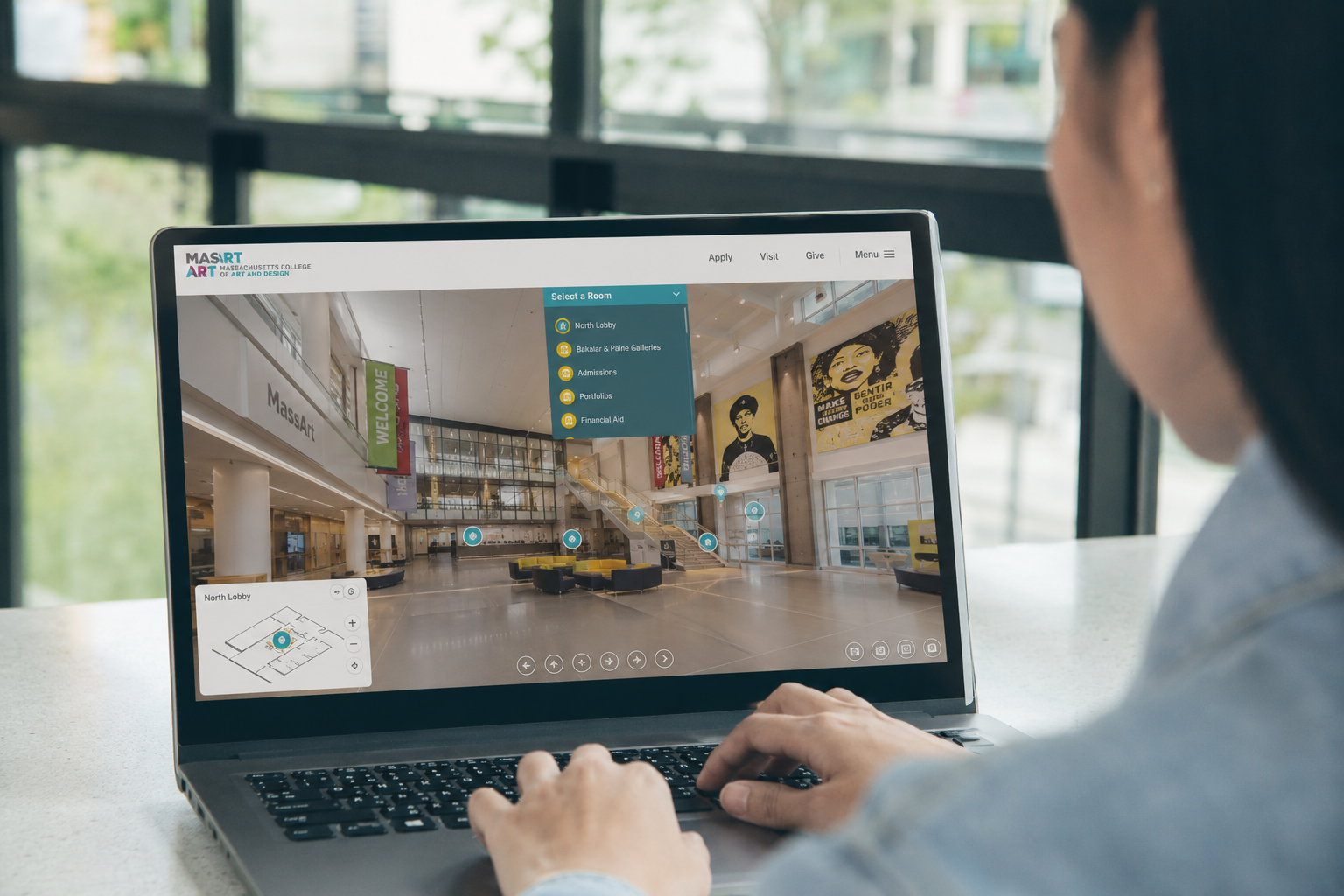
Users can explore a campus from the comfort of their own home with virtual tours. Users can see how spaces connect and become more acquainted with the surroundings thanks to interactive features like 360-degree views and comprehensive maps. Those who are unable to visit in person—whether because of distance, mobility problems, or financial limitations—benefit from this remote access.
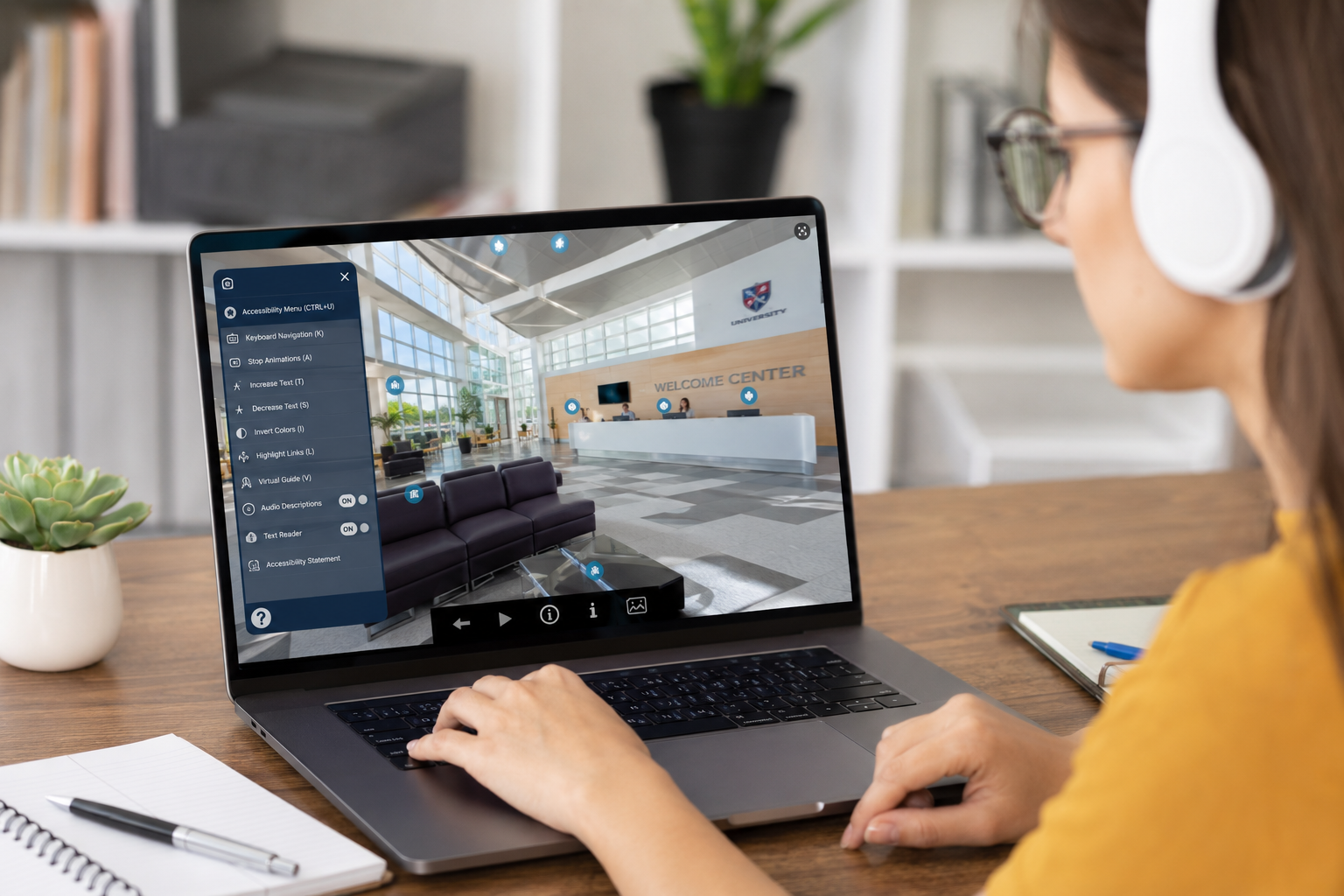
Features like audio guides and clear navigation instructions are frequently included in the tours, which are particularly beneficial for individuals with disabilities. This implies that everyone has access to crucial campus information, regardless of their location or level of physical ability.
Why Is Spatial Understanding Important for Accessibility?
Experiencing the spatial relationships between campus areas is one of the main benefits of virtual tours. For people with disabilities or those who are not familiar with the campus layout, knowing how long it takes to walk between important locations or how simple it is to access specific buildings can be very important. Students are more at ease when organizing their visit or their daily life on campus thanks to this clear view of the area.
Without virtual tours, students may overlook the most important information, such as accessible routes, or become disoriented in perplexing layouts upon arrival. These details are not missed thanks to virtual tours.
Benefits of Virtual Tours for Students, Parents, & Universities
1. Available Anytime
Virtual tours can be accessed at any time, which is ideal for international students or families in different time zones. This on‑demand access removes barriers for those unable to make scheduled visits.
2. Interactive and Customizable
Users can navigate the campus as if they were walking through it themselves, zooming in on areas of interest and exploring at their own pace. This is ideal for those with mobility concerns who need to plan routes.
3. Cross‑Device Accessibility
Virtual tours work seamlessly across smartphones, tablets, and desktops, ensuring access for all users, regardless of the device they use. This flexibility means that anyone can engage with the tour, whether they’re tech-savvy or not.
4. Better Understanding of the Campus
With virtual tours, prospective students can see how academic, social, and residential spaces are connected, helping them feel more confident about the campus layout. It gives them an experience closer to what they would have in person, providing valuable context about the university’s offerings.
5. Real-Time Analytics
Virtual tours also provide universities with insights into what users are most interested in. This data can be used to improve the campus experience and target future communications to meet the needs of students.
Common Myths about Virtual Tours
Virtual Tours Replace In-Person Visits
Virtual tours don’t replace campus visits. They provide an initial sense of the campus, but nothing beats the experience of being there in person. Tours help decide whether to visit in person; they don’t replace the visit itself.
Photos Are Enough to Showcase a Campus
Static images can’t provide the same depth of information as a virtual tour. They don’t show how the spaces connect or give users a true sense of scale and layout. Virtual tours allow for more interactive and dynamic exploration.
Virtual Tours Only Benefit International Students
While international students gain a lot from virtual tours, local students and those with mobility issues also benefit greatly. Virtual tours allow all prospective students to explore campuses that might be far away or hard to visit for other reasons.
FAQs
Virtual tours provide remote students with digital access to campus spaces, allowing them to explore without visiting in person.
Yes, they offer a flexible and accessible way for students with mobility issues to explore campuses remotely.
Yes, virtual tours work on smartphones, tablets, and desktops, ensuring accessibility for all users.
No, virtual tours are meant to complement in‑person visits, providing an initial preview before a physical trip.
Universities can use virtual tour data to understand what areas of the campus attract the most interest, helping to guide future engagement strategies.
I have a virtual tour on my website and would like an audit.
I don't have a virtual tour yet, would love a demo to see how it works.