







I have a virtual tour on my website and would like an audit.

I don't have a virtual tour yet, would love a demo to see how it works.

Introduction
If you’ve ever tried to explore a school or university through Google Maps or Street View, you’ve probably noticed something feels… incomplete.
You can see buildings. You can move along roads. You might even get a rough sense of layout.
But you don’t experience the campus.
For students deciding where to study—or for institutions trying to present their environment to a global audience—this gap matters more than it seems. A campus is not just a collection of buildings; it’s an ecosystem of learning, movement, interaction, and atmosphere.
This blog explores why tools like Google Maps and Street View fall short in representing real campus experiences—and how immersive virtual tours solve that problem in a fundamentally different way.
Key Takeaways
- Google Maps and Street View show locations, not experiences
- They lack guided navigation, context, and interaction
- Campus decision-making requires spatial understanding, not just visuals
- Virtual tours allow users to move, explore, and interpret spaces meaningfully
- Immersive walkthroughs create clarity, confidence, and accessibility
Why This Topic Matters?
Educational institutions are no longer communicating with a purely local audience. Prospective students are often evaluating campuses from different cities, countries, or even continents.
In this context, visual representation becomes a form of communication.
But not all visual tools are equal.
A static or semi-interactive platform like Google Maps may help someone locate a campus, but it does not help them understand it. That distinction is critical.
Virtual tours, on the other hand, are designed to bridge this gap. They provide:
- Accessibility for users who cannot visit in person
- Spatial clarity that helps users understand how spaces connect
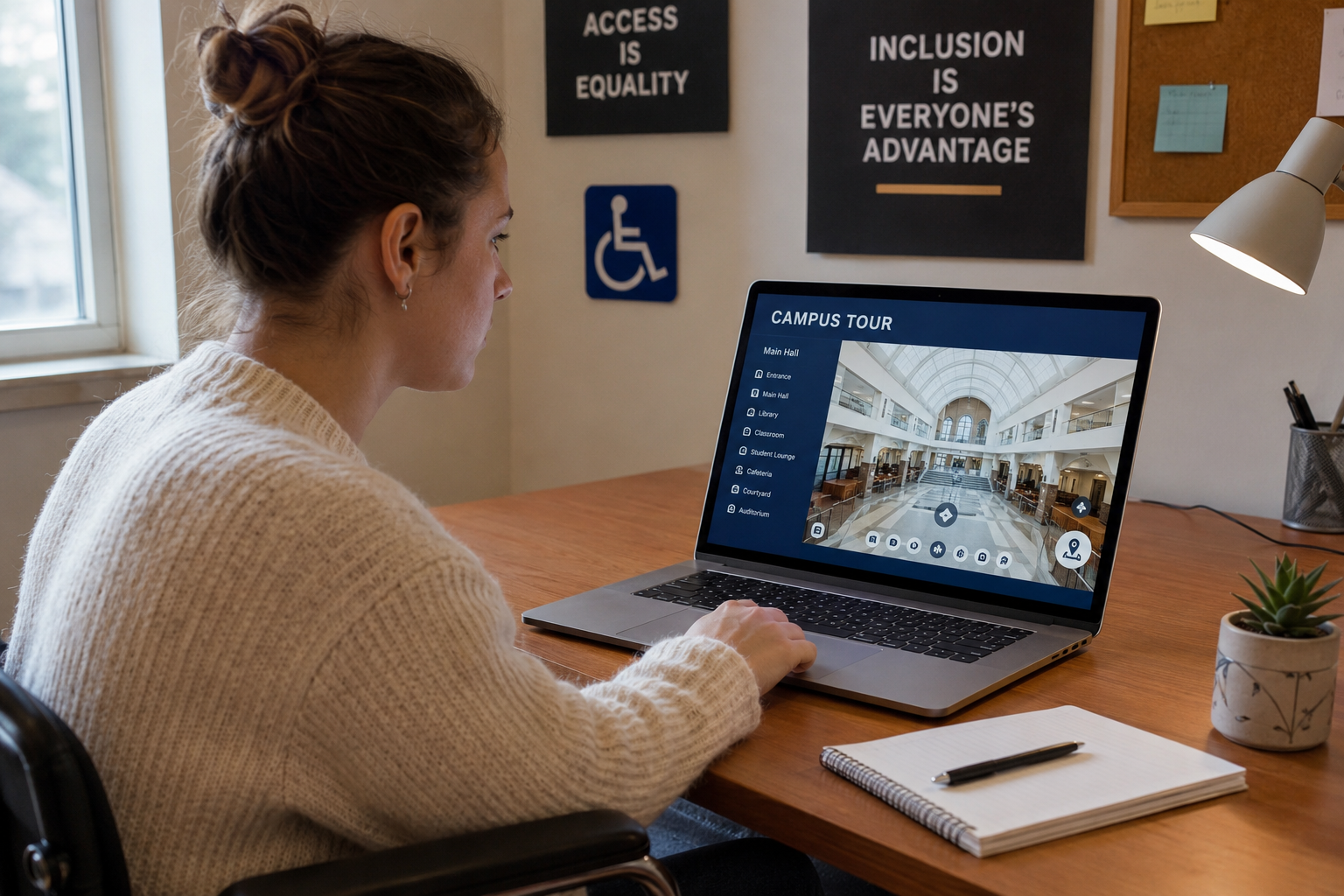
- Inclusion by making exploration possible for diverse audiences
- Contextual storytelling that explains what each space represents
Modern educational institutions are not adopting virtual tours simply as a trend—they are responding to a deeper need for transparency and clarity in how their spaces are experienced.
The Core Limitation of Google Maps and Street View
Static Navigation vs Intentional Exploration
Google Maps and Street View operate on a very specific logic: movement along predefined paths.
You are placed on a road or walkway, and you move forward or backward in increments. This works well for navigation—but not for exploration.
On a campus, this creates several limitations:
- You cannot freely enter buildings
- You cannot move naturally between indoor and outdoor spaces
- You are restricted to where the camera has been placed
This results in a fragmented experience. You see parts of the campus, but not how they connect.
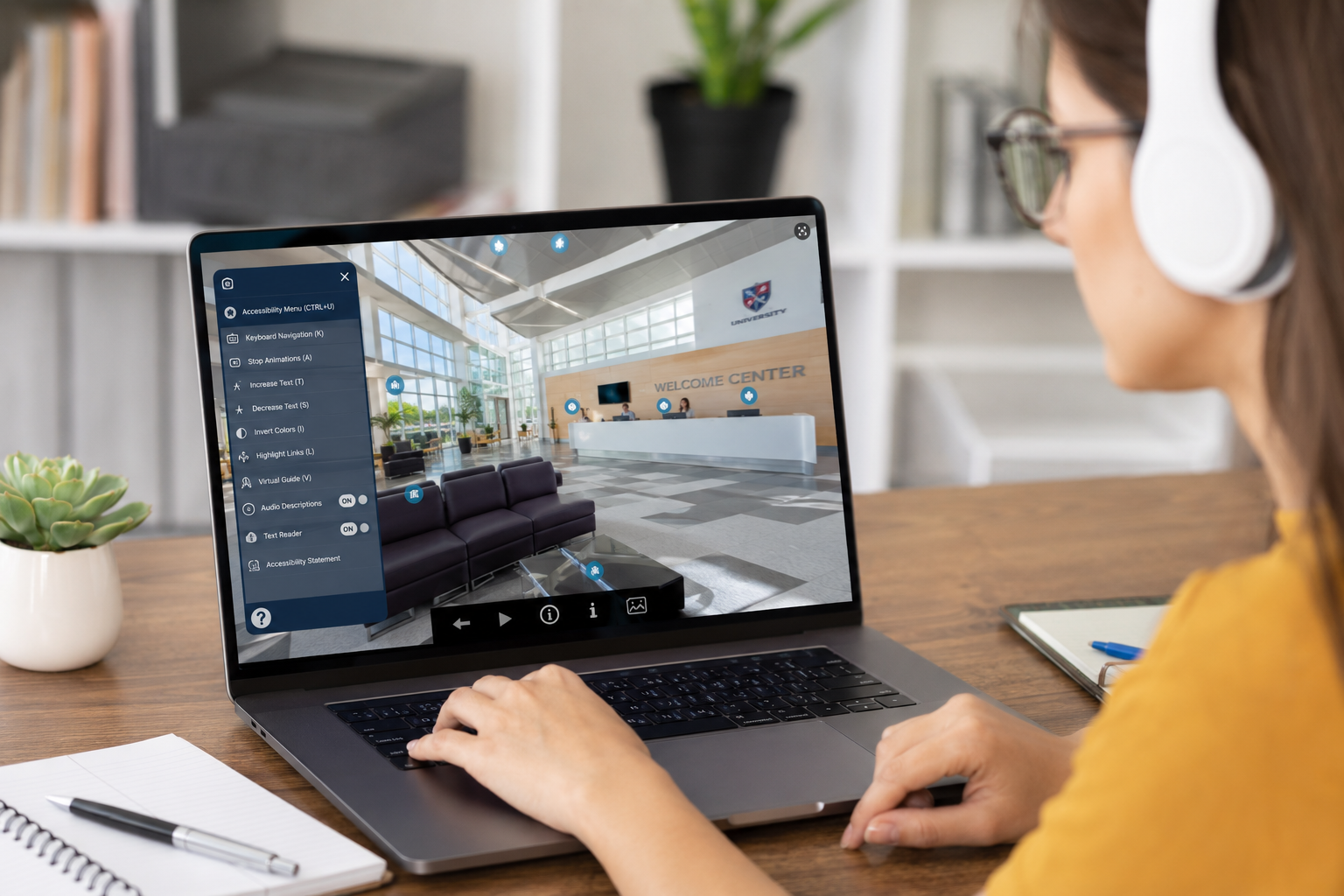
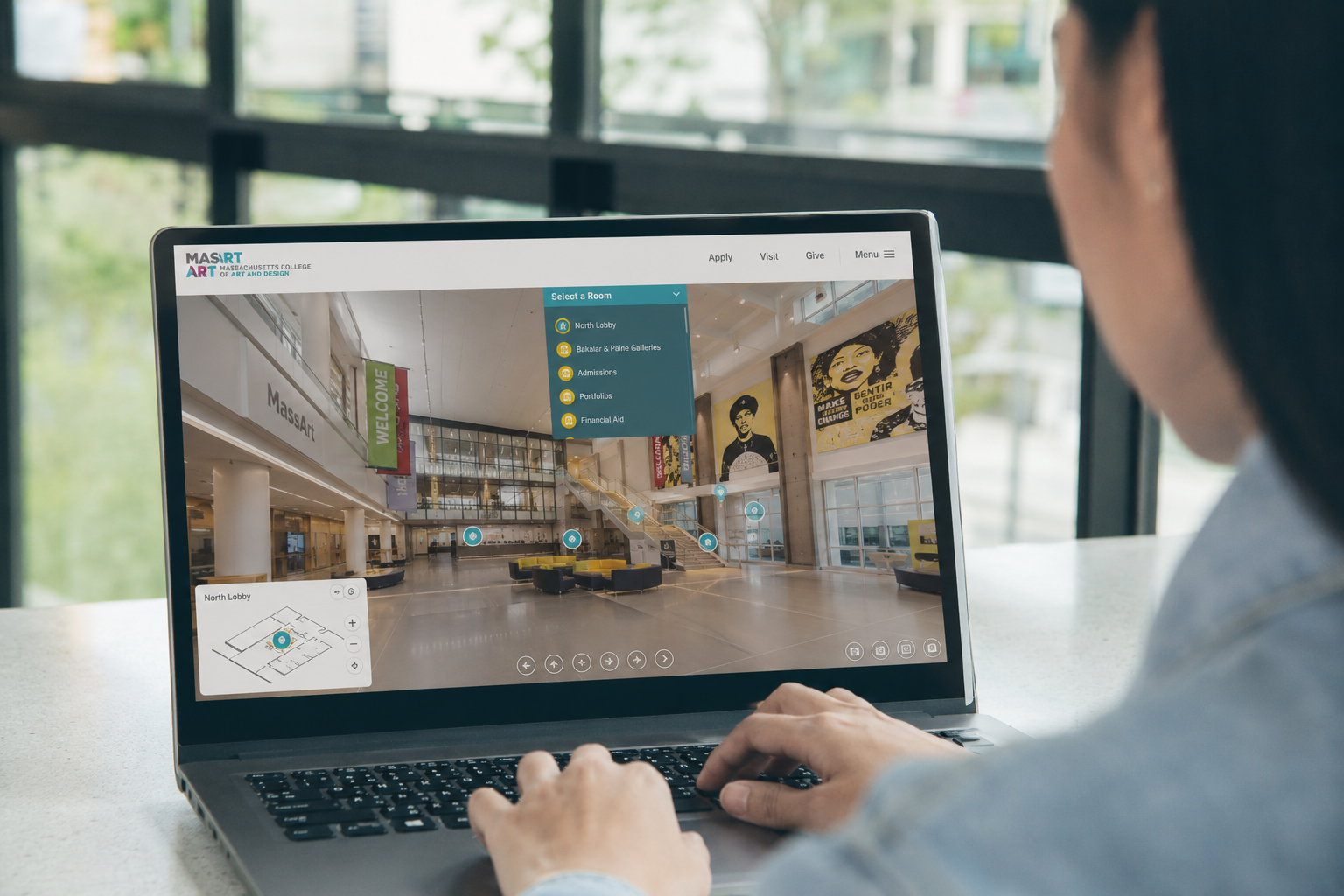
In contrast, immersive virtual tours allow users to move freely through spaces, navigating classrooms, dorms, libraries, and facilities as a continuous journey.
Lack of Contextual Information
Even when Street View provides a clear visual, it rarely answers the questions users actually have:
- What is this building used for?
- Who uses this space?
- What happens here daily?
Without context, visuals lose meaning.
Virtual tours address this by embedding interactive elements such as hotspots, multimedia, and guided information layers that explain what users are seeing in real time.
This transforms passive viewing into active understanding.
No Sense of Campus Flow or Experience
A campus is experienced through movement—walking from one place to another, understanding proximity, and sensing transitions between spaces.
Street View breaks this continuity.
You jump between points. You rotate in place. You move in rigid increments.
There is no sense of:
- How close the dorm is to the lecture hall
- What the transition from academic to social spaces feels like
- How the campus “flows” as a lived environment
Immersive virtual tours, especially those built with 360-degree environments and realistic walking paths, recreate this sense of flow.
Users don’t just see the campus—they move through it.
What a Real Campus Experience Actually Requires
1. Freedom of Movement
A meaningful campus experience starts with autonomy.
Users should be able to:
- Choose where to go
- Explore at their own pace
- Revisit spaces easily
Virtual tours enable this through interactive navigation systems, allowing users to move seamlessly between locations without restriction.
This is fundamentally different from the linear movement of Street View.
2. Multi-Layered Information
Real understanding comes from combining visuals with context.
In a well-designed virtual tour, a user can:
- Click on a lab to learn about programs offered
- Watch a short clip from faculty
- View additional media related to that space
This layered approach mirrors how people explore in real life—by observing, asking, and discovering.
Mass Interact’s virtual tours, for example, integrate multimedia content, interactive elements, and detailed facility insights within the environment itself.
3. Immersion and Perspective
Photos and Street View images are bound to fixed perspectives.
You see what the camera saw.
But immersive environments allow users to:
- Look around in all directions
- Zoom into details
- Shift perspective naturally
3D and 360-degree tours replicate real-world spatial relationships, allowing users to investigate spaces as if they were physically present.
This changes how users interpret space—from observation to participation.
Virtual Tours vs Google Maps: A Practical Comparison
User Behavior
- Google Maps: Users browse quickly, often scanning for location or directions
- Virtual Tours: Users engage deeply, spending time exploring and understanding
The difference lies in intent. Maps answer “Where is this?”
Virtual tours answer “What is it like to be here?”
Decision-Making Impact
When a student evaluates a campus, they are not just choosing a location—they are choosing an environment for years of their life.
Street View provides fragmented visuals.
Virtual tours provide:
- A sense of belonging
- A clearer understanding of facilities
- Confidence in decision-making
This is why immersive tours are often linked to stronger engagement and informed choices.
Spatial Clarity
Maps show layout.
Virtual tours show relationships.
For example:
- Maps may show where a building is
- A virtual tour shows how that building connects to student life
This difference directly affects how users perceive accessibility, convenience, and campus culture.
Beyond Education: Why This Gap Matters for All Physical Spaces
While this discussion focuses on schools and universities, the limitation of Maps and Street View applies broadly.
Organizations across industries face the same challenge:
- Hotels need to show atmosphere, not just rooms
- Museums need to convey narrative, not just exhibits
- Healthcare facilities need to build trust through transparency
Virtual tours enable all of this by creating interactive, human-centered experiences of space.
They are not just visual tools—they are communication tools.
FAQs
It provides a basic visual reference, but it lacks depth, context, and interactivity. It does not allow users to explore indoor spaces or understand how the campus functions as a whole.
They allow prospective students to explore facilities, understand layouts, and engage with content, helping them make more informed and confident choices.
No. They are valuable for anyone who cannot visit easily, including local students with time constraints or families evaluating multiple options.
A video is linear—you watch what is shown.
A virtual tour is interactive—you choose where to go and what to explore.
They don’t replace them entirely, but they significantly reduce uncertainty and help users shortlist options before visiting in person.
Final Thoughts
Google Maps and Street View were never designed to capture experience—they were designed to show location.
And that distinction is exactly where they fall short for educational institutions.
Today, the challenge is not just visibility. It is understanding, trust, and accessibility.
Virtual tours respond to this shift by allowing users to:
- Move through spaces naturally
- Interact with meaningful information
- Experience environments before arriving
For institutions, this is not just a technological upgrade. It is a more transparent and inclusive way to present their space to the world.
I have a virtual tour on my website and would like an audit.
I don't have a virtual tour yet, would love a demo to see how it works.