







I have a virtual tour on my website and would like an audit.

I don't have a virtual tour yet, would love a demo to see how it works.

We are currently living through a “saturation phase” of AI imagery, where AI-generated images have exploded from a niche experiment to a dominant force in visual culture. Static images have long been the go-to method for businesses to display their venues digitally.
In this scenario, interactive Virtual Tours are helping by offering verifiable, multi-dimensional explorations that are far harder for AI to fabricate convincingly, restoring user trust amid the flood of easily manipulated static photos and providing a level of authenticity and engagement that cuts through the visual “slop.”
As digital norms advance into 2026, with AI-enhanced experiences and ubiquitous VR, organizations realize that standalone images no longer satisfy contemporary users. AI’s role in generating fluid, adaptive content makes static photos feel even more archaic amid the “Zombie Internet.”
Viewers are now seeking deeper engagement than mere stills. They yearn for genuine immersion: strolling virtually through areas, and picturing themselves in the actual environment.
Takeaways
- Static photos freeze moments, missing the essence of motion amid AI saturation.
- Interactive virtual tours deliver deep spatial insight and context, enhanced by AI-driven personalization to counter fake imagery.
- User-driven navigation fosters trust and precision, with AI suggesting optimal paths in a distrustful visual landscape.
- Organizations gain from enhanced transparency and lifelike representation, powered by AI-generated realism without the slop.
Static Photos Are Long Gone
Viewers might ponder:
- What’s the true distance between zones?
- How do areas interconnect seamlessly?
- What’s the holistic feel of traversing the entire setting?
Design experts stress that spatial comprehension arises from motion. Without it, grasping proportions, circulation, and arrangement becomes challenging. Static photos strip away this vital dimension, and AI saturation makes them even less reliable.
Interactive Virtual Tours Create Spatial Understanding
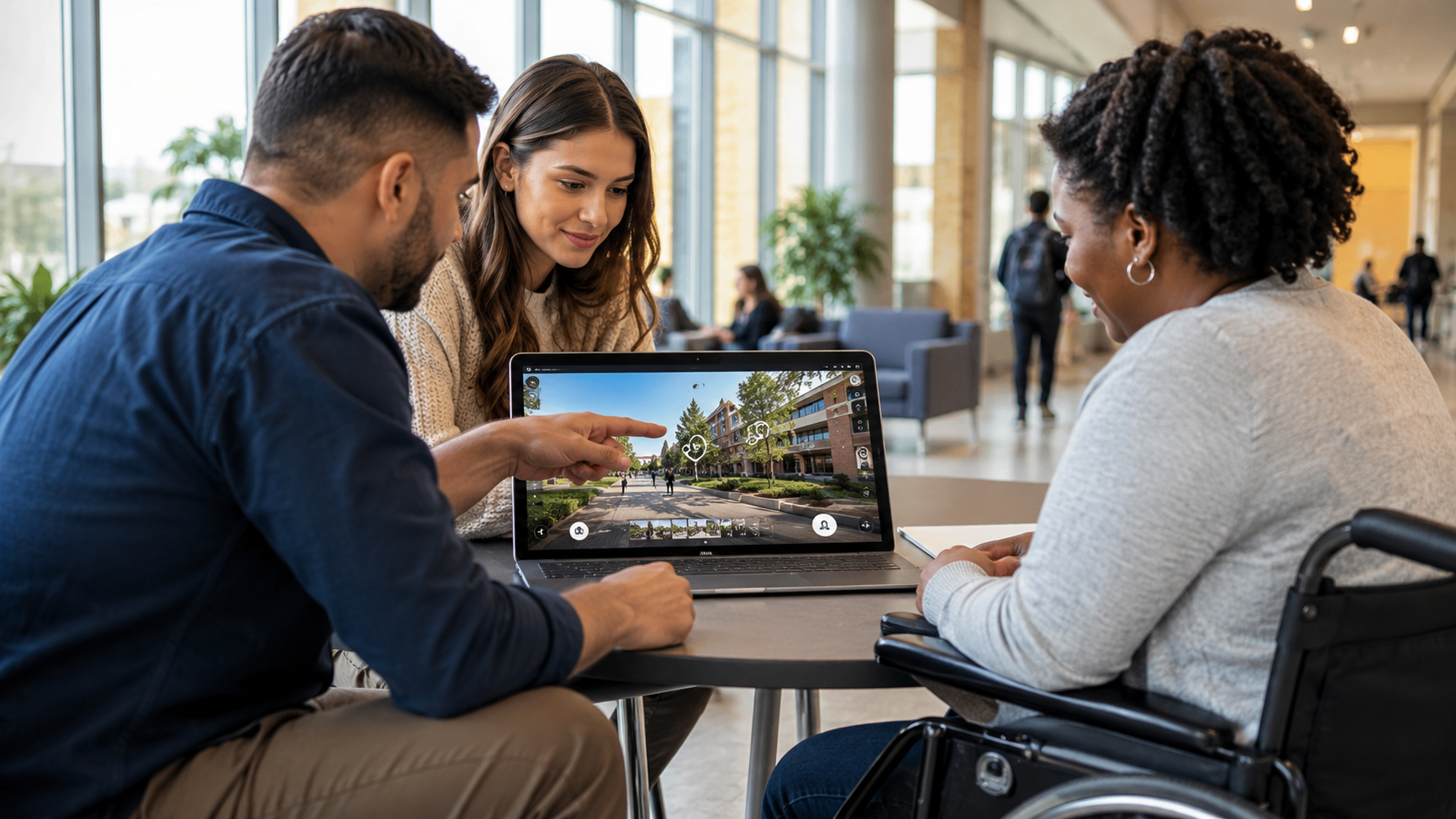
Interactive virtual tours empower users to traverse environments fluidly. Rather than leaping between disjointed images, explorers enjoy seamless continuity.. a stark contrast to AI-saturated static feeds.
This is crucial because:
- Spatial connections crystallize.
- Shifts between sections feel intuitive.
- Configurations become straightforward to internalize.
By enabling free movement, users construct a cognitive blueprint of the space. This level of grasp is unattainable via photos and significantly boosts assurance and ease, especially with 2026’s high-fidelity rendering tech. AI further elevates this by analyzing user behavior to highlight relevant features or generate custom overlays, like virtual annotations or simulated lighting changes, bypassing AI image fatigue.
Control Shifts From Presenter to Visitor
Static photos dictate the gaze. Virtual tours hand over the reins, restoring user agency in an era of bot-driven AI content.
This power transfer revolutionizes engagement. Users can:
- Linger on intriguing spots.
- Circle back to sections as needed.
- Prioritize areas aligned with their interests.
On a psychological level, this independence cultivates trust. When entities permit unrestricted probing, they demonstrate openness and faith in their venues.
Instead of a polished montage, virtual tours promote genuine uncovering, amplified by 2026’s intuitive interfaces. AI takes it a step further by learning from interactions to recommend personalized routes, such as guiding a potential buyer through accessibility-friendly paths in a property tour.
Realism Builds Confidence and Reduces Uncertainty
A subtle powerhouse of interactive virtual tours is their unfiltered realism. Spaces appear in their true form, beyond staged perfection or flattering illumination.. unlike the glossy AI “slop” proliferating online.
This authenticity aids in:
- Establishing precise anticipations.
- Minimizing doubts for distant audiences.
- Enabling well-grounded choices.
With clear visibility and unhindered navigation, individuals in 2026 gain heightened confidence, diminishing guesswork in an era of remote everything. AI enhances realism through generative models that fill in details from incomplete scans, creating hyper-realistic environments or even simulating dynamic elements like crowd movements or weather effects, while avoiding the pitfalls of static AI fakes.
Why Photos Struggle to Communicate Scale and Flow
Photos frequently warp proportions. Wide lenses inflate expanses. Tight crops obscure proximities.. issues compounded by AI’s logic errors in generated images.
Virtual tours counter this with:
- Uninterrupted progression.
- Diverse vantage points.
- Authentic viewpoints.
Users achieve sharper awareness of:
- Chamber sizes.
- Overhead clearances.
- Routes and linkages.
This precision proves invaluable for expansive or intricate setups, where 2026’s augmented reality overlays add even more depth. AI algorithms process vast datasets to accurately reconstruct scale and flow, correcting distortions that plague traditional photography and AI-generated statics.
Interactive Experiences Match Modern Digital Behavior in 2026
Contemporary users thrive on interactivity. From immersive maps to dynamic previews, exploration trumps mere observation in a saturated visual world.
Interactive virtual tours sync with this by:
- Promoting active involvement over passive scrolling.
- Extending dwell times.
- Fueling inquiry-based journeys.
In 2026, adopters of virtual tours align with users’ habits, ditching archaic static modes that seem relics in a metaverse-driven world. AI integration matches this behavior by using machine learning to predict and adapt to user queries, such as voice-guided explorations or real-time translations for global audiences, cutting through AI image noise.
The Role of Virtual Tours in Accessibility and Inclusion
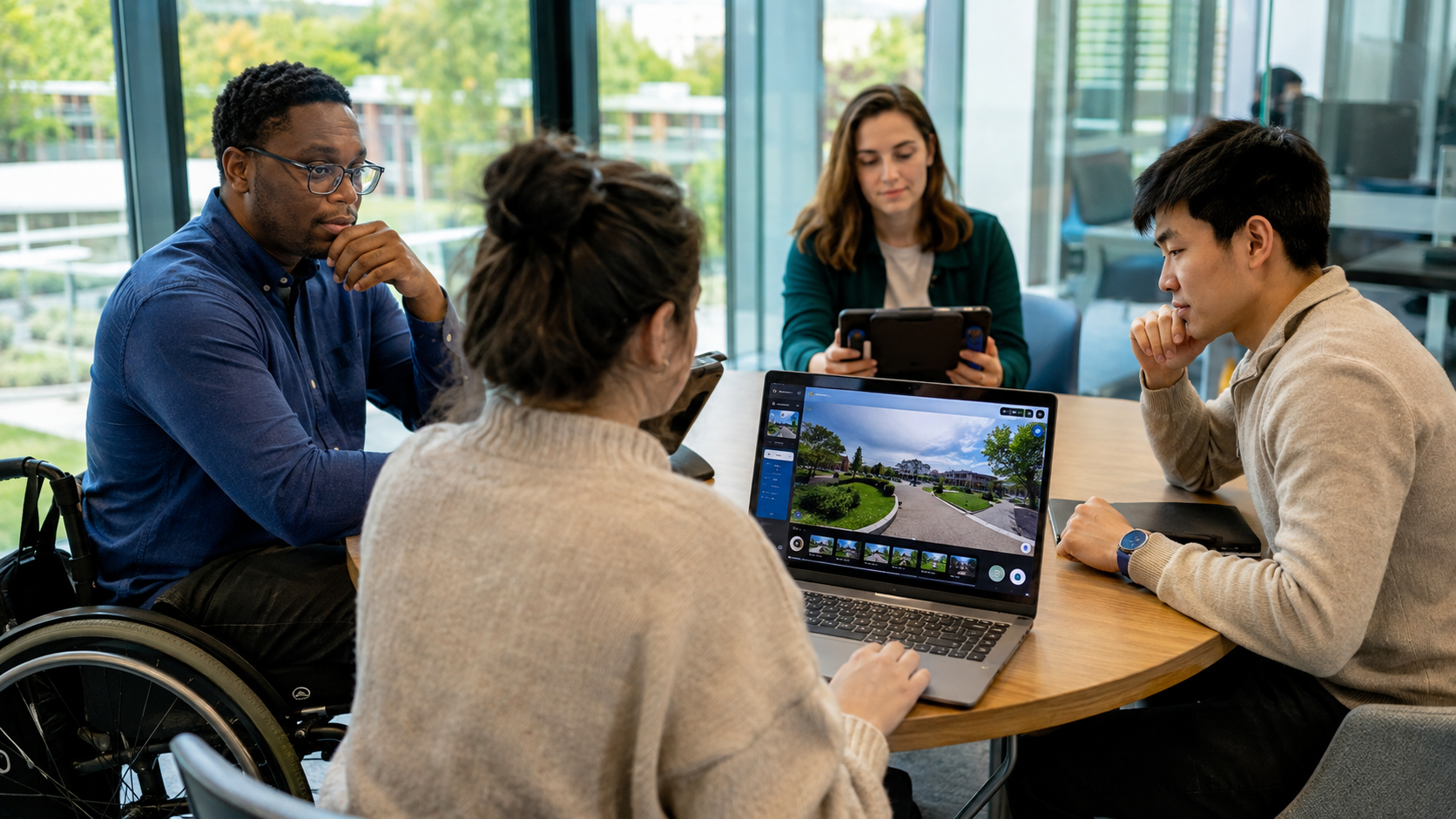
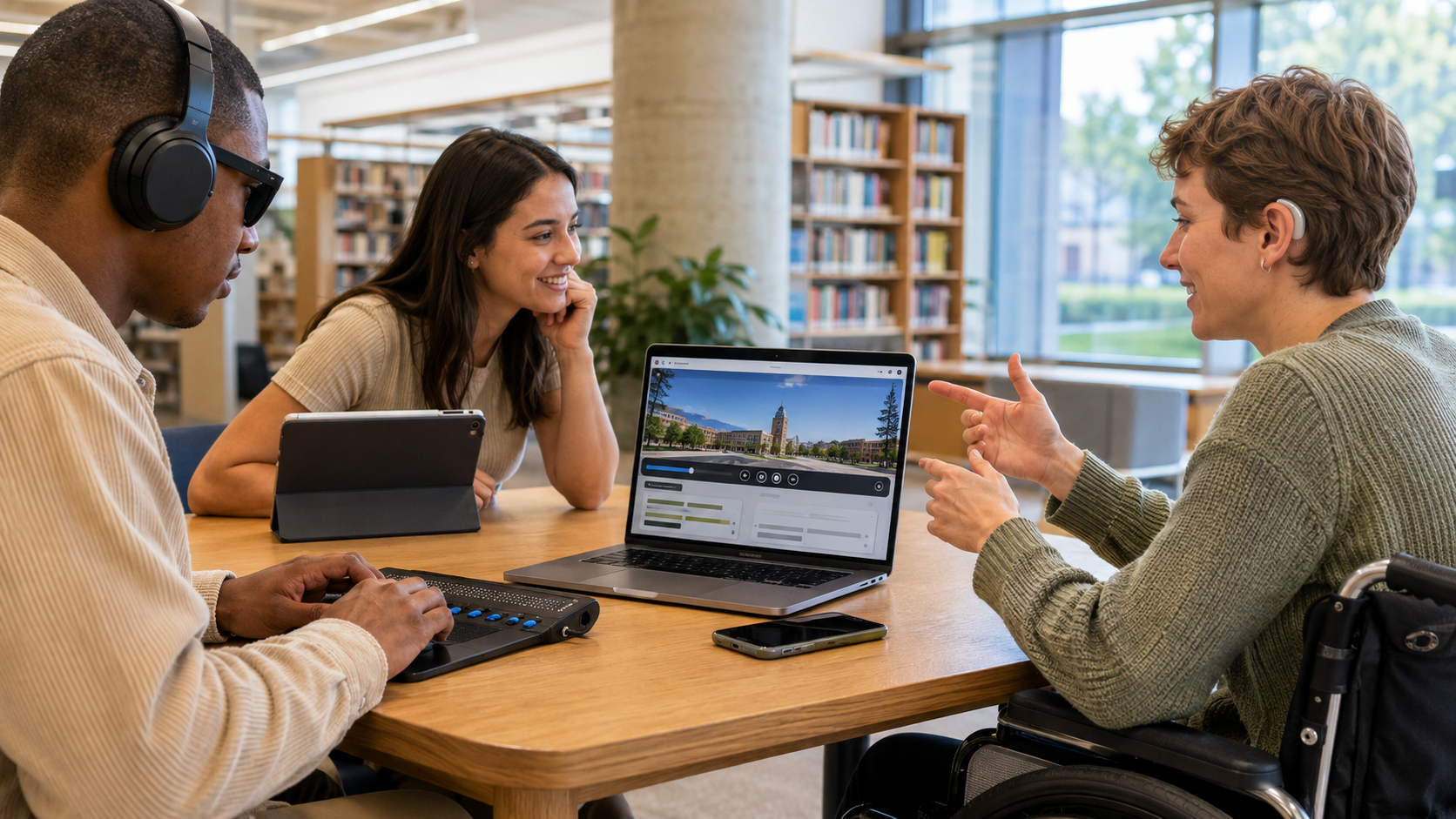
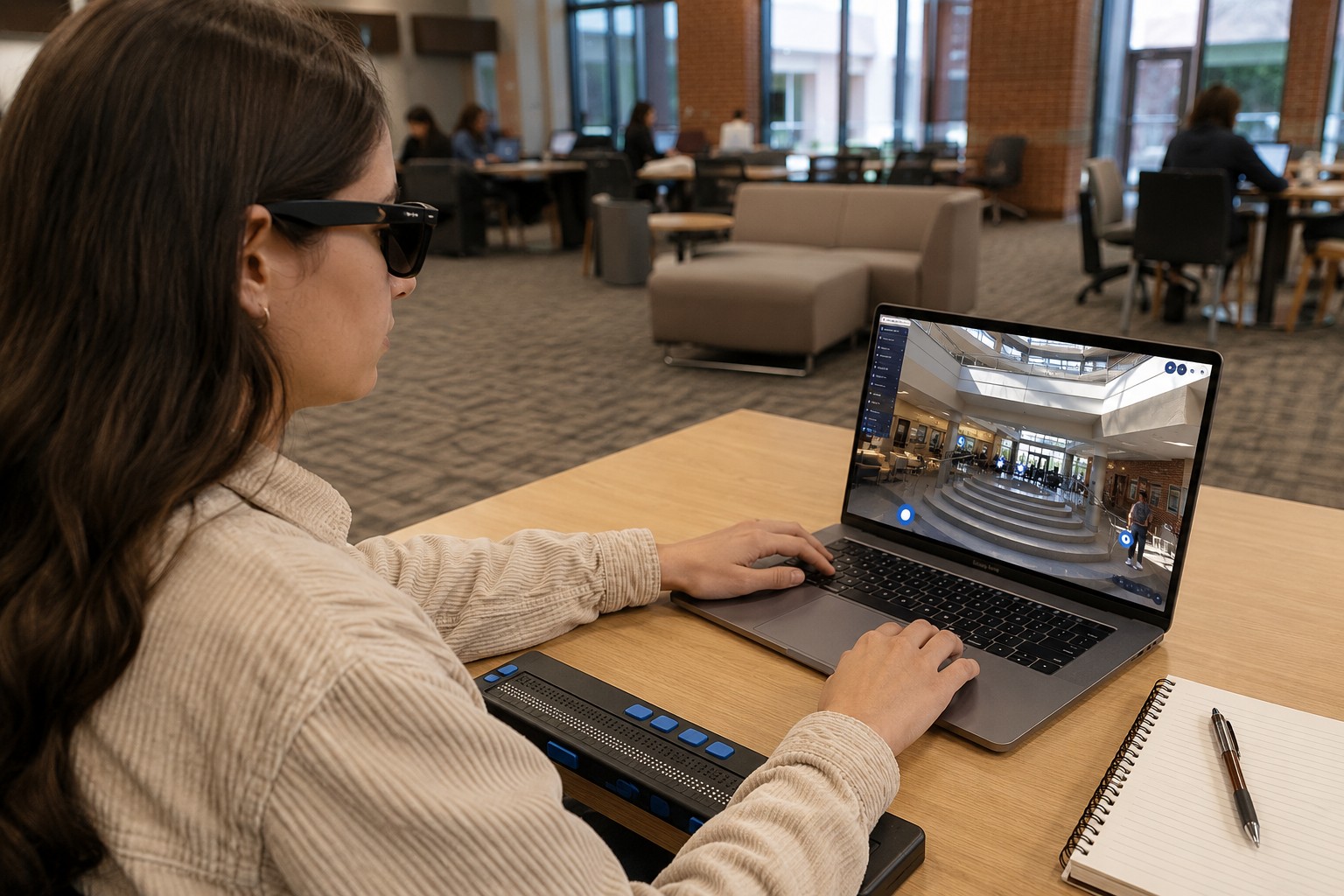
Static photos can inadvertently marginalize. They might lack depth for those with mobility challenges, sensory needs, or in-person barriers especially when AI fakes add confusion.
Virtual tours enhance inclusivity by:
- Enabling strain-free discovery.
- Ensuring uniform access worldwide.
- Championing equitable digital encounters.
This resonates with 2026’s emphasis on universal design, clarity, and fair information dissemination. AI plays a pivotal role here, offering features like automated audio descriptions for the visually impaired or adaptive interfaces that adjust based on user accessibility profiles, promoting inclusion amid visual saturation.
When Photos Still Have Value
Static photos retain utility. They excel in:
- Promotional assets.
- Key visual accents.
- Auxiliary materials.
Yet, in 2026, photos thrive as supplements, not frontrunners. Virtual tours dominate where immersion, detail, and mobility are paramount. Even here, AI can upscale or enhance static photos to integrate them seamlessly into virtual experiences, leveraging the “human premium” for verified content.
When Photos Still Have Value
Static photos retain utility. They excel in:
- Promotional assets.
- Key visual accents.
- Auxiliary materials.
Yet, in 2026, photos thrive as supplements, not frontrunners. Virtual tours dominate where immersion, detail, and mobility are paramount. Even here, AI can upscale or enhance static photos to integrate them seamlessly into virtual experiences, leveraging the “human premium” for verified content.
FAQs
Yes. They offer dynamics, context, and spatial accuracy that isolated photos can’t replicate, with AI adding intelligent layers for superior engagement amid image saturation.
No. Photos augment virtual tours but cede the primary role in spatial exploration, often serving as inputs for AI-generated tours while avoiding the “AI look” fatigue.
Most 2026 virtual tours feature seamless, device-agnostic navigation, often with AI guidance for effortless interaction.
Final Thoughts
By 2026, preferences lean toward authenticity, detail, and interactivity amid AI image saturation. Interactive virtual tours address this by letting people roam freely, comprehend designs organically, and instill confidence via openness. AI’s transformative effects; from personalization to hyper-realism, are driving this replacement, making virtual experiences not just replacements, but superior evolutions in our increasingly virtual landscape, where verification and immersion trump flooded static imagery.
I have a virtual tour on my website and would like an audit.
I don't have a virtual tour yet, would love a demo to see how it works.