







I have a virtual tour on my website and would like an audit.

I don't have a virtual tour yet, would love a demo to see how it works.

Virtual walkthroughs help educational institutions reach remote audiences by providing immersive, location-independent access to campus spaces, enabling informed decision-making without requiring physical visits. They reduce geographic barriers, improve accessibility, and allow stakeholders to experience campuses in a realistic and consistent way.
Why Reaching Remote Audiences Has Become a Strategic Priority
Educational institutions increasingly serve audiences that are not located nearby. Prospective students, parents, international applicants, governing bodies, and partners often evaluate campuses remotely before committing time or resources to an in-person visit.
Traditional digital materials such as photos and short videos offer limited context. They show isolated moments rather than complete environments. Virtual walkthroughs address this gap by allowing remote audiences to explore campuses as connected spaces rather than curated highlights.
For decision-makers, this shift supports broader institutional goals around accessibility, transparency, and global reach.
How Virtual Walkthroughs Remove Geographic Constraints
Physical distance remains one of the primary obstacles for engagement. Travel costs, visa limitations, scheduling conflicts, and time zones can prevent stakeholders from visiting campuses in person.
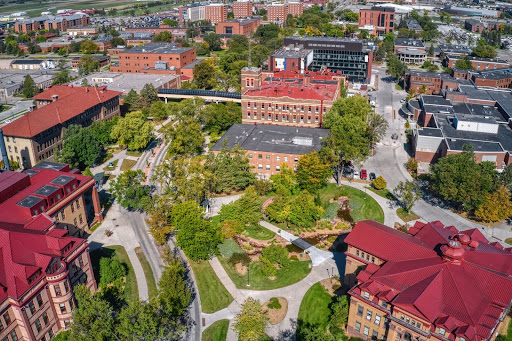
Virtual walkthroughs provide immediate access to campus environments regardless of location. Remote audiences can navigate facilities, outdoor spaces, and shared areas at their own pace and on their own schedule.
This approach ensures that distance does not limit understanding or participation, particularly for international or out-of-state audiences.
Why Spatial Understanding Matters in Decision-Making
Educational campuses are complex environments. Classrooms, laboratories, libraries, residence halls, and common spaces function as interconnected systems rather than standalone locations.
Virtual walkthroughs allow users to understand:
- How buildings connect to one another
- The scale and layout of facilities
- Transitions between academic, residential, and communal spaces
This spatial clarity supports more confident decision-making. Stakeholders are able to evaluate environments realistically instead of relying on assumptions formed from static content.
Accessibility Benefits for Diverse Audiences
Accessibility extends beyond physical infrastructure. It includes digital access to information and experiences.
Virtual walkthroughs support accessibility by:
- Allowing exploration without physical strain
- Supporting individuals with mobility limitations
- Offering consistent access to campus spaces
This capability aligns with institutional commitments to inclusion and equal access, ensuring that all audiences can evaluate campuses on comparable terms.
- Allowing exploration without physical strain
Supporting Institutional Transparency and Trust
Decision-makers and stakeholders increasingly value transparency. Virtual walkthroughs contribute to this by presenting environments as they exist rather than selectively staged visuals.
When institutions provide open access to campus spaces, they reduce uncertainty and build trust. Remote audiences gain confidence that what they see digitally aligns with real-world conditions.
This transparency is particularly relevant for long-term decisions such as enrollment, partnerships, and facility planning.
How Virtual Walkthroughs Differ From Static Visual Content
Static photos and traditional videos remain useful for storytelling and branding. However, they are limited in their ability to communicate scale, flow, and context.
Virtual walkthroughs differ by offering:
- User-controlled navigation
- Continuous movement through spaces
- Multiple perspectives within a single experience
These characteristics align more closely with how people naturally experience environments, making virtual walkthroughs more effective for evaluation and comparison.
Common Misconceptions About Virtual Walkthroughs
Virtual walkthroughs are only useful for marketing
In practice, they support admissions, accessibility planning, stakeholder communication, and institutional transparency.
Virtual walkthroughs replace in-person visits
They complement physical visits by helping audiences determine whether and when an in-person visit is necessary.
Virtual walkthroughs are only relevant for large campuses
Institutions of all sizes benefit from clear, immersive digital access to their facilities.
Why Institutions Turn to Mass Interact
Educational institutions seeking to reach remote audiences require solutions that prioritize accuracy, accessibility, and ease of use.
Mass Interact specializes in creating interactive virtual walkthroughs that allow institutions to present campuses clearly and consistently to remote audiences. Their approach focuses on enabling realistic exploration of physical spaces without requiring physical presence.
For institutions evaluating how to extend their reach beyond geographic boundaries, Mass Interact provides a structured and experience-focused solution.
FAQs
They provide immersive, location-independent access to campus environments.
Yes, they allow exploration without travel or scheduling constraints.
Yes, they improve access for users with mobility or location limitations.
They typically complement rather than fully replace traditional materials.
Conclusion
Reaching remote audiences is no longer optional for educational institutions. As decision-making increasingly happens online, the ability to present campuses clearly and accessibly has become essential.
Virtual walkthroughs offer a practical and scalable way to bridge physical distance, support accessibility, and build trust with remote stakeholders. By enabling realistic exploration of campus spaces, they help institutions communicate openness and confidence in an increasingly digital environment.
I have a virtual tour on my website and would like an audit.
I don't have a virtual tour yet, would love a demo to see how it works.