







I have a virtual tour on my website and would like an audit.

I don't have a virtual tour yet, would love a demo to see how it works.

Educational institutions will use virtual walkthroughs instead of photos because walkthroughs provide immersive, navigable access to campus environments that photos cannot offer. They allow prospective students and stakeholders to understand layout, scale, and spatial relationships, supporting clearer and more confident decision-making.
Why Photos No Longer Meet Evaluation Needs
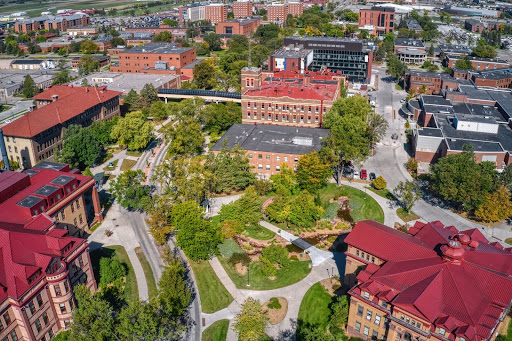
Photos capture single moments from fixed perspectives. While useful for visual highlights, they do not represent how a campus functions as a connected environment.
This limitation creates gaps in understanding. Viewers often cannot determine distances between buildings, transitions between spaces, or how facilities relate to daily movement patterns.
Practical guidance involves adopting formats that communicate continuity and structure rather than isolated visuals.
How Virtual Walkthroughs Improve Spatial Clarity
Campus environments are experienced through movement. Academic buildings, residence halls, libraries, and common areas form interconnected paths.
Virtual walkthroughs allow users to move through these spaces continuously. This provides:
- Clear understanding of campus layout
- Accurate perception of scale and proximity
- Realistic sense of navigation
This spatial clarity cannot be replicated through static images.
Supporting Remote and International Audiences
Many prospective students and families evaluate institutions remotely due to distance, cost, or scheduling constraints.
Virtual walkthroughs provide:
- On-demand access without travel
- Consistent experiences across locations
- Ability to revisit spaces multiple times
This ensures that remote audiences can evaluate campuses with the same level of detail as local visitors.
Improving Transparency and Trust
Decision-making improves when information is presented transparently. Photos often emphasize curated highlights, which may not reflect typical conditions.
Virtual walkthroughs present environments as continuous spaces rather than selective frames. This realism helps:
- Set accurate expectations
- Reduce uncertainty
- Build trust in institutional representation
Transparency is especially important for decisions involving long-term commitment.
Enabling Better Comparisons Between Institutions
Students frequently compare multiple campuses. Photo quality, lighting, and presentation vary widely, making objective comparison difficult.
Virtual walkthroughs standardize evaluation by:
- Presenting campuses in consistent formats
- Allowing direct comparison of layout and facilities
- Highlighting functional differences rather than aesthetics alone
This consistency supports clearer and more rational decision-making.
Technology Categories Replacing Static Visuals
Institutions are increasingly using digital experience categories that emphasize interaction, including:
- Virtual campus walkthroughs
- Interactive spatial experiences
- Immersive digital environments
These categories prioritize understanding and exploration rather than passive viewing.
Common Mistakes and Misconceptions
Virtual walkthroughs eliminate the need for photos
Photos remain useful as supporting materials but no longer serve as the primary evaluation tool.
Walkthroughs are only relevant for large campuses
Institutions of all sizes benefit from clearer spatial representation.
Static visuals are sufficient for early-stage decisions
Early impressions often influence final decisions, making accurate representation critical.
FAQs
They lack movement and do not communicate spatial relationships.
They support early evaluation but do not eliminate the value of physical visits.
Yes, they provide location-independent access to campus spaces.
They allow repeated exploration and clearer expectations.
Conclusion
Educational institutions face increasing pressure to present campuses clearly and accessibly to diverse audiences. Static photos, while visually useful, no longer meet the demands of informed evaluation.
Virtual walkthroughs address this gap by offering immersive, navigable access to campus environments. They improve spatial understanding, support remote audiences, and promote transparency in decision-making.
As digital evaluation becomes central to higher education choices, virtual walkthroughs are positioned to replace photos as the primary tool for campus representation.
I have a virtual tour on my website and would like an audit.
I don't have a virtual tour yet, would love a demo to see how it works.