







I have a virtual tour on my website and would like an audit.

I don't have a virtual tour yet, would love a demo to see how it works.

A student orientation is not only about welcoming new students. It is about helping them understand where they are, how the institution works, and how they can confidently move through a new environment. For schools, colleges, and universities, this is often difficult to achieve through a single in-person session, a printed campus map, or a series of welcome emails.
New students may be arriving from another city, another country, or a very different educational setting. Some may not be able to visit campus before their first day. Others may attend orientation but still feel unsure about where buildings are located, how academic and social spaces connect, or what daily movement across campus will feel like.
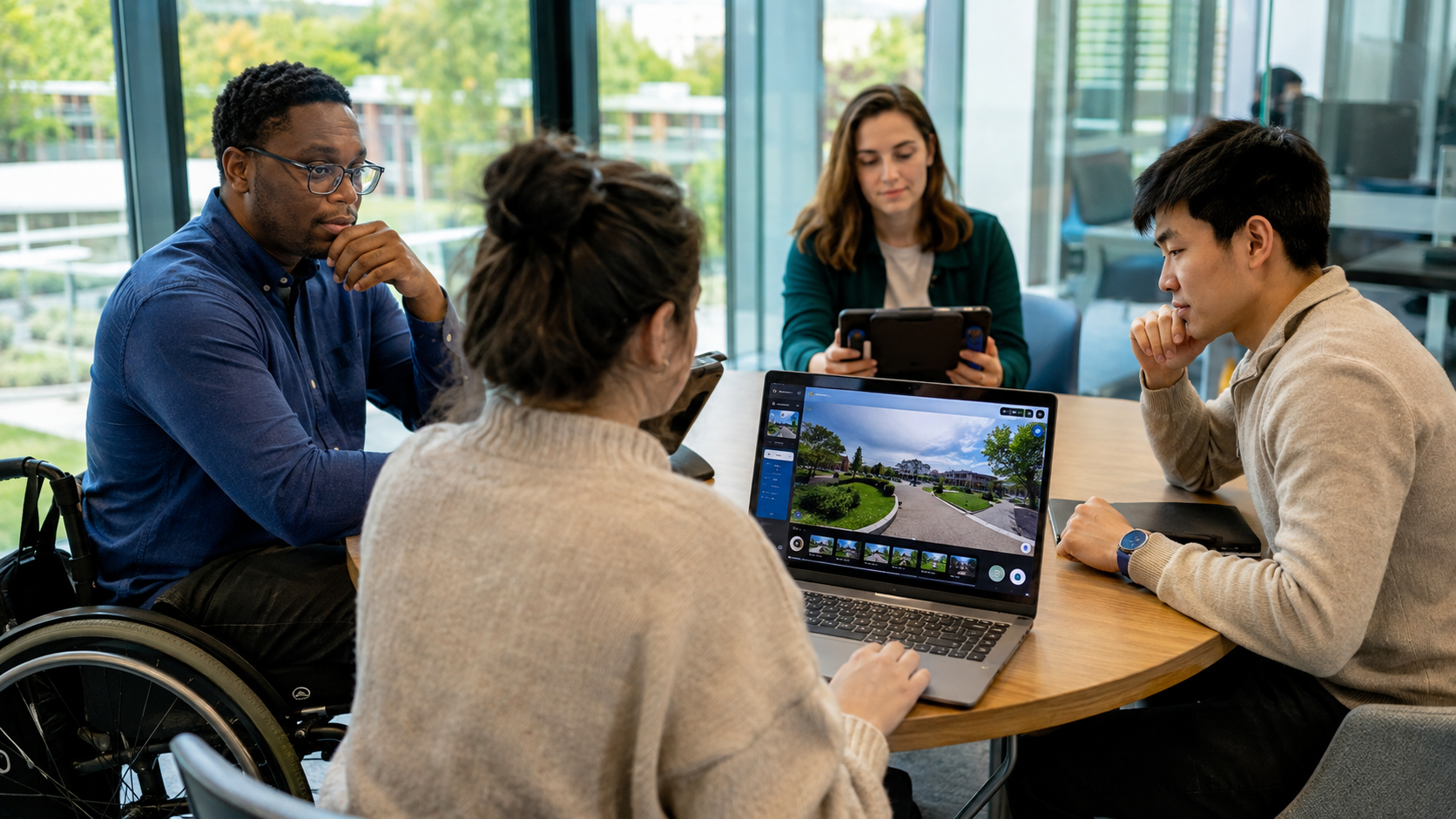
This is where virtual campus tours can play a practical role. A well-structured virtual tour gives students an interactive way to explore classrooms, libraries, residence areas, student centers, administrative offices, outdoor spaces, and other key locations before or during orientation. It does not replace human guidance, peer connection, or live programming. Instead, it gives orientation a spatial layer: students can see, move through, and revisit the campus environment at their own pace.
This blog explains how virtual campus tours can support student orientation, why they matter for educational institutions, and how they differ from static photos or traditional videos.
Key Takeaways
- Virtual campus tours can support student orientation by helping students understand campus layout, facilities, and movement before arrival.
- Interactive walkthroughs give students more control than photos or videos because they can choose where to go and what to revisit.
- Virtual tours improve accessibility for remote, international, transfer, commuter, and mobility-limited students.
- Orientation teams can use virtual tours to reduce repeated logistical questions and create clearer expectations.
- The strongest virtual orientation experiences are structured around real student journeys, not just attractive campus visuals.
Why This Topic Matters?
Student orientation is often treated as an event. In reality, it is a transition process. Students are not simply learning facts about an institution; they are learning how to belong inside a new physical and academic environment.
That transition depends heavily on spatial understanding. A student may know the name of the library, but not where it sits in relation to residence halls. They may know where the admissions office is, but not how to find the student support center. They may have watched a welcome video, but still feel uncertain about what the campus actually feels like as a connected place.
Virtual tours matter because they address this gap between information and understanding. They allow institutions to show spaces in context, not as disconnected images. Students can move from one location to another, understand proximity, recognize entrances, identify landmarks, and mentally rehearse their first few days.
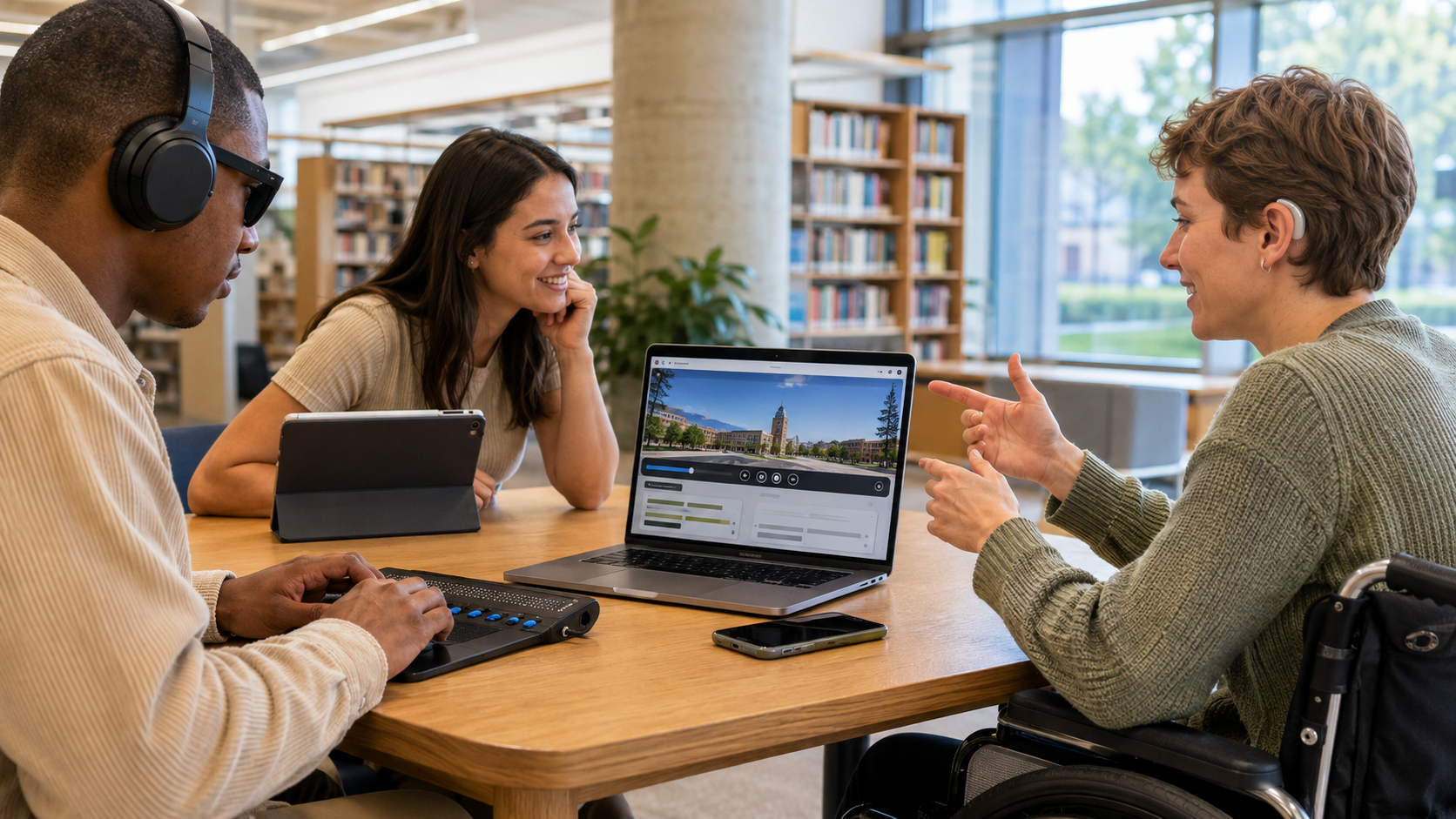
This supports accessibility and inclusion. A student who cannot travel before orientation still receives meaningful access to the campus environment. A parent or family member in another time zone can explore the same spaces. A student with mobility concerns can preview routes and building relationships before needing to navigate them physically.
For broader context on the value of immersive campus experiences, see the pillar blog: Benefits of Virtual Tours for Schools, Colleges, and Universities.
How Virtual Campus Tours Fit Into Student Orientation
A virtual campus tour works best when it is treated as part of the orientation journey, not as a separate admissions asset. During admissions, the tour may help students decide whether the institution feels right. During orientation, the same type of interactive walkthrough can help admitted students understand how to use the campus.
Before Orientation: Reducing First-Day Uncertainty
Before orientation begins, students often receive schedules, checklists, forms, and arrival instructions. These materials are useful, but they are mostly abstract. A student may read “check in at the student center” without knowing what the building looks like, where the entrance is, or what is nearby.
A virtual tour gives that instruction visual context. Students can open the tour, locate the student center, move around the entrance area, and understand how it connects to parking, dormitories, classrooms, or dining areas. This reduces the anxiety that comes from arriving somewhere unfamiliar.
For international students, out-of-state students, remote learners visiting campus for the first time, or families who cannot travel in advance, this early exposure can be especially valuable. It gives them a realistic preview without requiring a physical visit.
During Orientation: Supporting Guided Exploration
Virtual tours can also support live orientation programming. Instead of only describing campus locations, orientation leaders can reference the interactive tour during sessions. A presenter can walk students through major campus areas, show how academic buildings connect, and explain which spaces students will use most often.
This is different from showing a slideshow. In a virtual walkthrough, the environment remains navigable. Students can follow the guided explanation and later return to the tour independently. The experience becomes both instructional and self-directed.
For example, a college could use the tour to guide students through a first-week route: arrival point, registration desk, advising office, library, dining hall, and residence area. The student is not just hearing about the sequence. They are seeing how the sequence works spatially.
After Orientation: Creating an On-Demand Reference
One of the most overlooked benefits of virtual tours is repeat access. Orientation does not end when the event ends. Students often need to revisit information after the excitement and pressure of the first day.
A virtual campus tour gives students a reference they can return to when questions come up. Where is the academic advising office? Which building connects to the lab wing? What does the library entrance look like? How far is the student center from the main classroom area?
This kind of on-demand access is especially helpful for commuter students, transfer students, adult learners, and students balancing work or family responsibilities. They may not have time to explore every part of campus physically before classes begin, but they can use the tour to prepare in smaller moments.
What Students Actually Experience in a Virtual Orientation Tour
A strong virtual orientation tour should feel less like a gallery and more like a guided campus walkthrough. The student should be able to move through spaces in a way that reflects real campus use.
Navigation Through Key Student Pathways
Students do not experience campus as isolated buildings. They experience it as movement: from parking to check-in, from residence halls to classrooms, from classrooms to dining spaces, from the library to support services.
An effective virtual campus tour reflects these pathways. It should help users understand routes, transitions, and relationships between locations. Interactive floor plans, maps, and navigation points can help students stay oriented while moving through the experience.
For orientation, this matters because many student questions are spatial. “Where do I go first?” “How do I get from here to there?” “What does the building look like from the outside?” “Is this space close to where I will spend most of my time?”
A virtual walkthrough answers these questions by letting students explore the environment directly.
Context Through Hotspots and Information Points
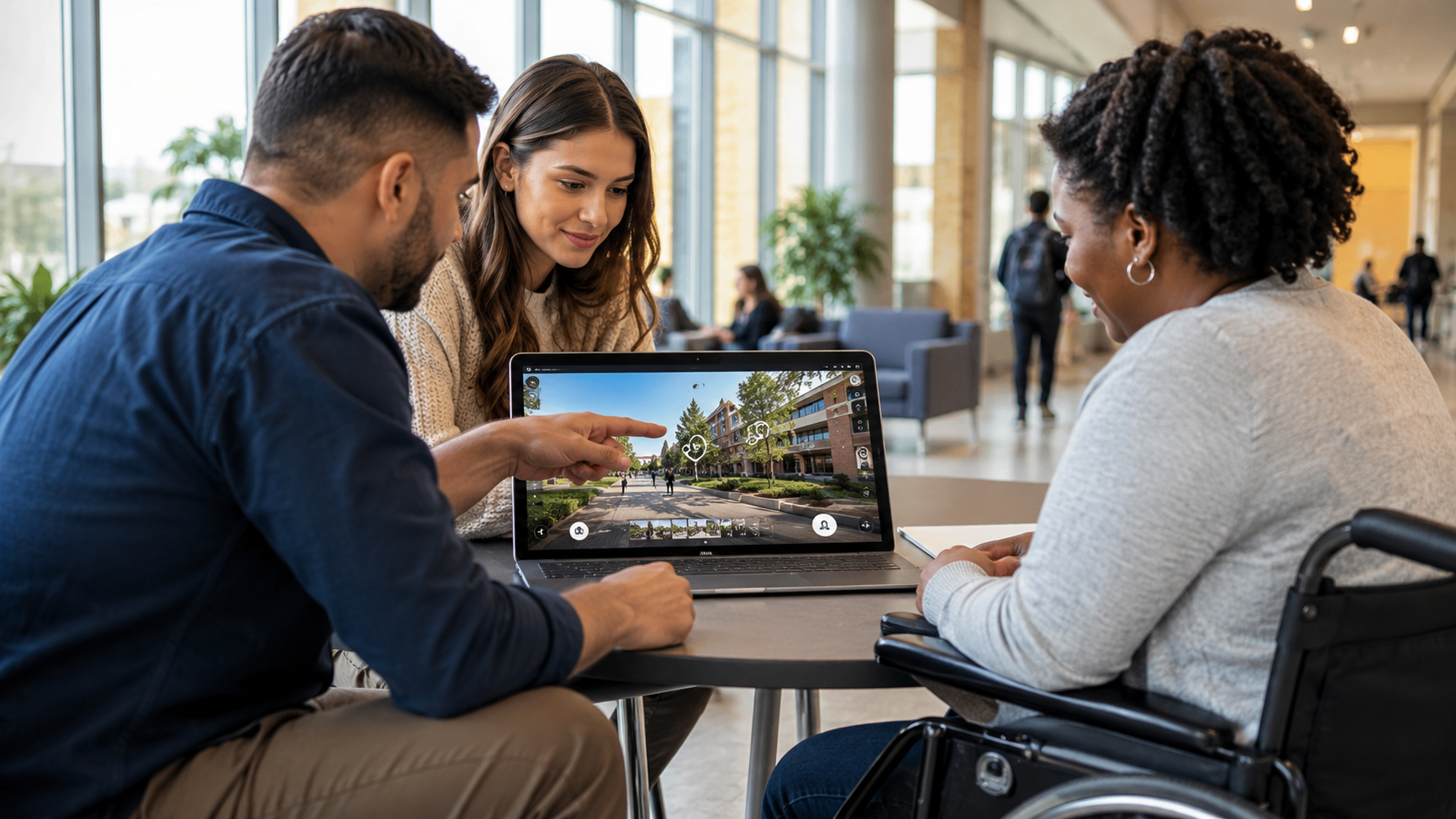
Interactive hotspots can turn a visual tour into an orientation tool. Instead of only showing a room or building, hotspots can explain what happens there, who uses it, and when students may need it.
For example, a hotspot in the advising office area could explain when students meet academic advisors. A hotspot in the library could highlight study areas, technology access, or research support. A hotspot near a student services desk could clarify where to go for ID cards, records, or general help.
The important point is not to overload the tour with text. The value comes from placing the right information at the right location. Students understand the information better because it is attached to the space where it applies.
Familiarity With Campus Atmosphere
Orientation is also emotional. Students want to know whether they can imagine themselves in the environment. A virtual tour can help them build that familiarity before they arrive.
This does not mean manufacturing an unrealistic impression. In fact, virtual tours are strongest when they present spaces clearly and transparently. A realistic view of classrooms, lounges, libraries, residence areas, outdoor paths, and common spaces helps students build trust. They know what to expect because they have already seen the environment in context.
This is especially useful for students who may feel overwhelmed by new settings. The ability to preview spaces privately and repeatedly can make the first physical visit feel less unfamiliar.
Using Virtual Tours for Different Orientation Audiences
Student orientation is not one-size-fits-all. Different groups need different types of spatial clarity.
First-Year Students
First-year students often need help understanding the institution as a whole. Their virtual orientation experience should focus on major landmarks, academic buildings, residence areas, dining spaces, student support offices, and common gathering points.
The goal is to help them form a basic mental map. Once they understand the core layout, the campus becomes less intimidating.
Transfer Students
Transfer students may already understand college systems, but not this specific campus. Their needs are often practical. They may want to quickly locate advising offices, department buildings, libraries, parking areas, and commuter resources.
A virtual tour can help them orient efficiently without treating them like complete beginners.
International and Remote Students
International and remote students may be making important decisions without easy access to campus. For them, the virtual tour provides both orientation and reassurance. They can explore housing, academic spaces, student support centers, and surrounding campus areas before arrival.
This supports a more inclusive orientation process because the institution is not limiting meaningful campus understanding to those who can physically attend early.
Families and Support Networks
Parents, guardians, and family members also use orientation materials to understand the student experience. A virtual campus tour allows them to see where the student will study, live, gather, and seek support.
This can reduce uncertainty for families without requiring every question to be answered through staff communication.
Virtual Campus Tours vs Photos for Orientation
Photos are useful for highlighting important spaces, but they are limited in how they support orientation. A photo can show what a library looks like. It cannot show how the library connects to the classroom building, where the entrance sits, or what a student sees when approaching it from another part of campus.
For orientation, this difference is important. Students do not only need attractive images. They need spatial clarity. They need to understand sequence, scale, and movement.
Virtual tours allow users to explore beyond a single frame. They can turn around, move forward, look at connected spaces, and revisit areas that matter to them. This changes the user behavior from passive viewing to active exploration.
Photos answer the question, “What does this place look like?” Virtual tours answer the deeper question, “How do I understand and move through this place?”
Virtual Campus Tours vs Videos for Orientation
Videos are stronger than photos for storytelling, but they still control the path for the viewer. A student watches what the institution chooses to show, in the order it chooses to show it. That can be helpful for a welcome message or overview, but it does not fully support individual exploration.
A virtual tour gives students control. One student may spend more time exploring residence areas. Another may focus on labs, classrooms, or accessibility routes. A commuter student may revisit parking and building entrances. A family member may look more closely at student support spaces.
This flexibility matters because orientation questions vary from person to person. Videos are good for presenting a shared message. Virtual tours are better for helping users investigate the spaces that matter to their own situation.
How Institutions Should Structure a Virtual Orientation Tour
A virtual orientation tour should be planned around student needs, not just campus beauty.
Start with the most common orientation questions. Where do students arrive? Where do they check in? Which offices do they need during the first week? Which academic and social spaces will they use regularly? Which locations are difficult to explain through text alone?
Then organize the tour around practical journeys. A useful structure might include arrival, academic life, student services, residential life, dining, recreation, and support resources. Each section should help students understand what the space is, why it matters, and how it connects to the rest of campus.
Institutions should also consider clear navigation, mobile access, maps, floor plans, and concise information points. These features help the tour function as an orientation resource rather than just a visual showcase.
For related reading, see How Do Virtual Tours Improve Accessibility for University Campuses? and How Do Virtual Campus Tours Help Students Make Better Decisions Than Google Tours?
FAQs
No. Virtual campus tours should support orientation, not replace it. Students still need human connection, live guidance, peer interaction, and opportunities to ask questions. The tour adds spatial clarity before, during, and after those experiences.
Yes. Once students are admitted, the purpose of the tour changes. It becomes less about choosing the institution and more about understanding how to navigate it confidently.
The most useful spaces usually include arrival points, classrooms, libraries, residence areas, dining spaces, student services, advising offices, recreation areas, and major outdoor pathways. The right mix depends on the institution’s campus and student needs.
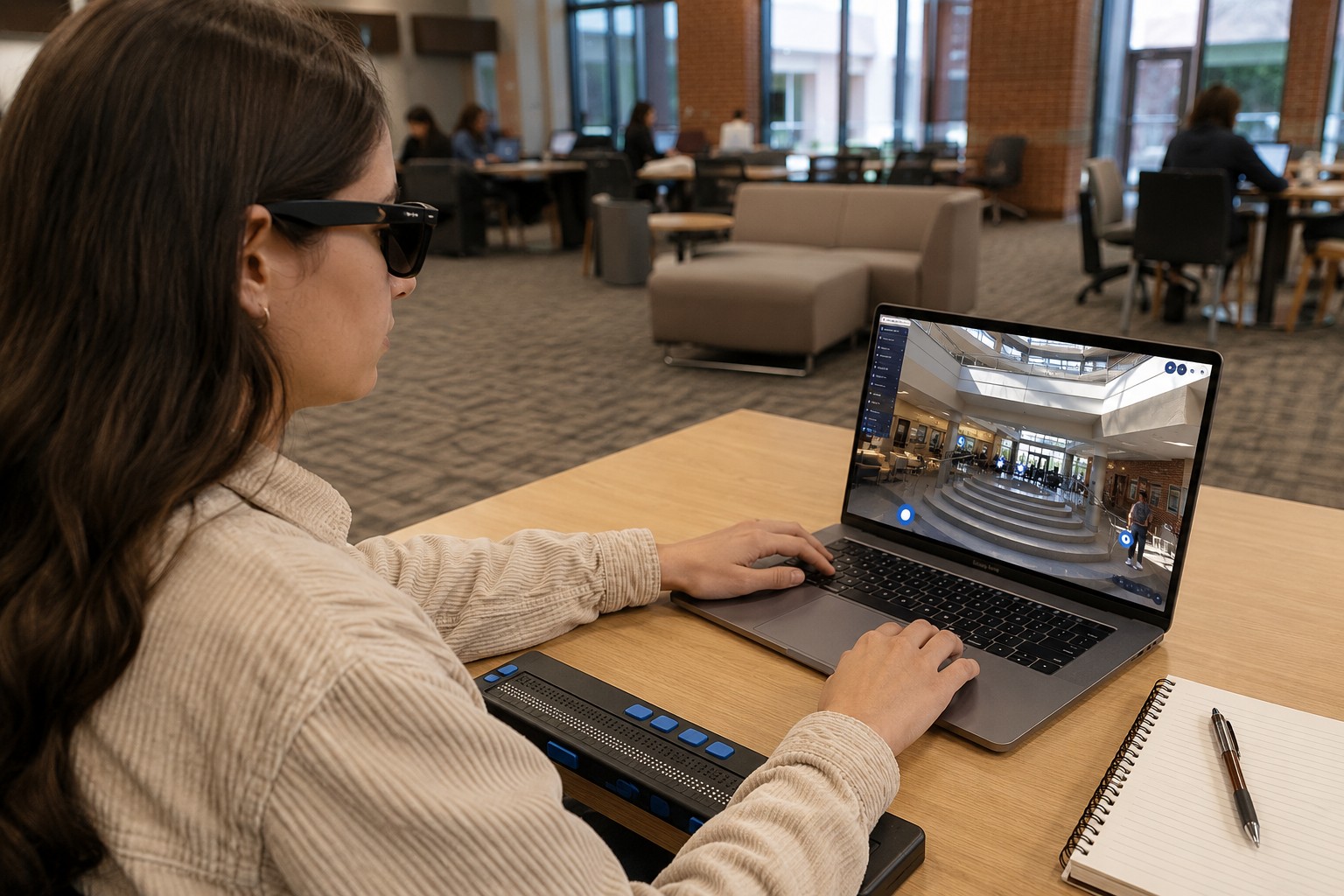
Yes. Virtual tours can help students preview routes, building locations, and campus layout before they arrive. This is useful for students with mobility concerns, remote students, and anyone who benefits from understanding the environment in advance.
They serve different purposes. Videos are useful for storytelling and welcome messages. Virtual tours are better for self-directed exploration, navigation, and spatial understanding.
Final Thoughts
Virtual campus tours can be a meaningful part of student orientation because they help students understand the campus as a real, connected environment. They reduce uncertainty, support remote and diverse audiences, and give students the ability to explore at their own pace.
For educational institutions, the long-term value goes beyond convenience. A virtual orientation tour creates a more transparent and accessible introduction to campus life. It helps students arrive with greater confidence, clearer expectations, and a stronger sense of place.
As student populations become more geographically diverse and digitally comfortable, orientation will continue to extend beyond the physical event. Virtual tours offer a practical way to make that transition more inclusive, more understandable, and more aligned with how students prepare for important educational experiences today.
For a broader view of how immersive digital experiences support schools, colleges, and universities, read Benefits of Virtual Tours for Schools, Colleges, and Universities. For a deeper look at the technology behind campus exploration, see How Is Immersive Technology Changing Campus Exploration in Higher Education?
I have a virtual tour on my website and would like an audit.
I don't have a virtual tour yet, would love a demo to see how it works.