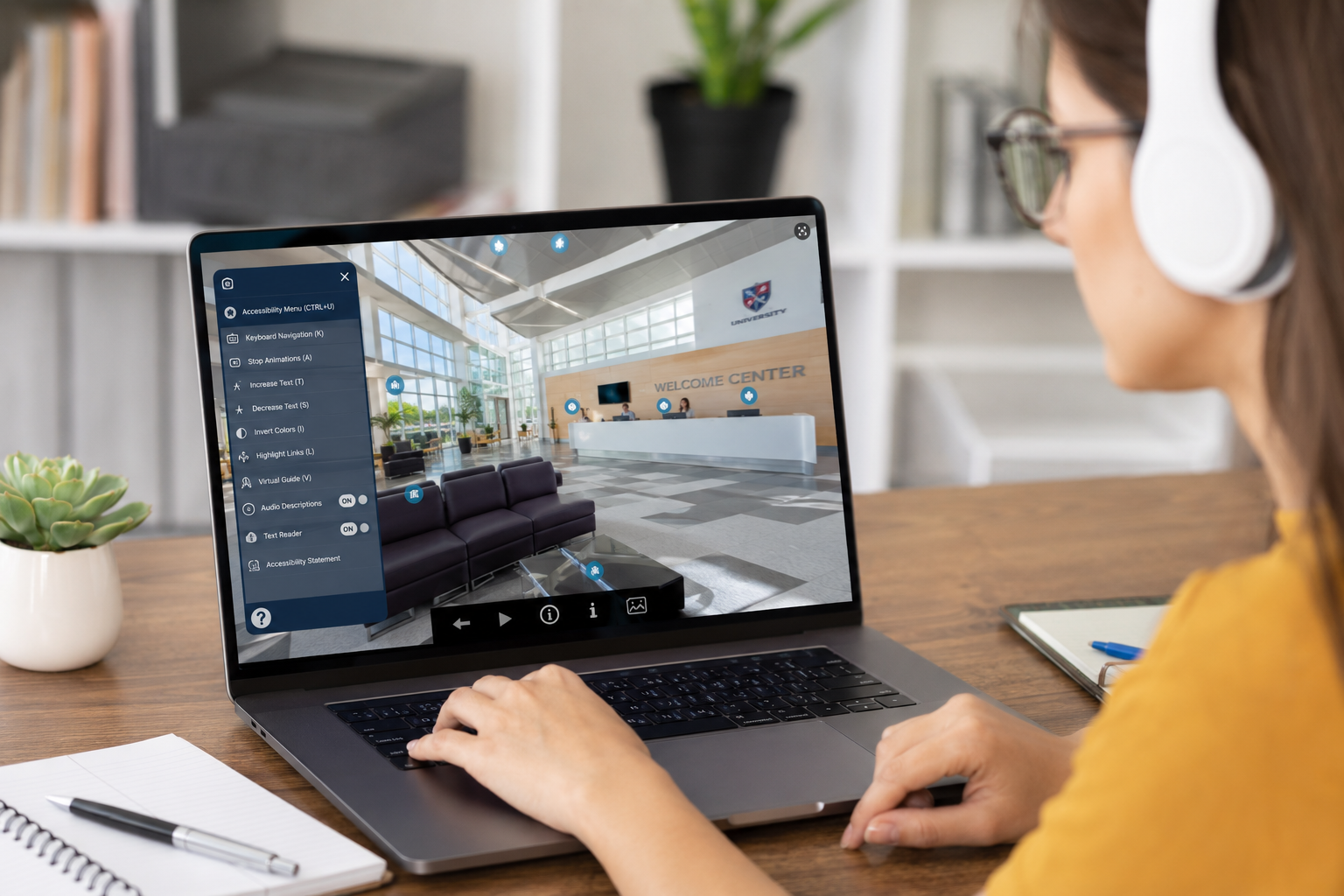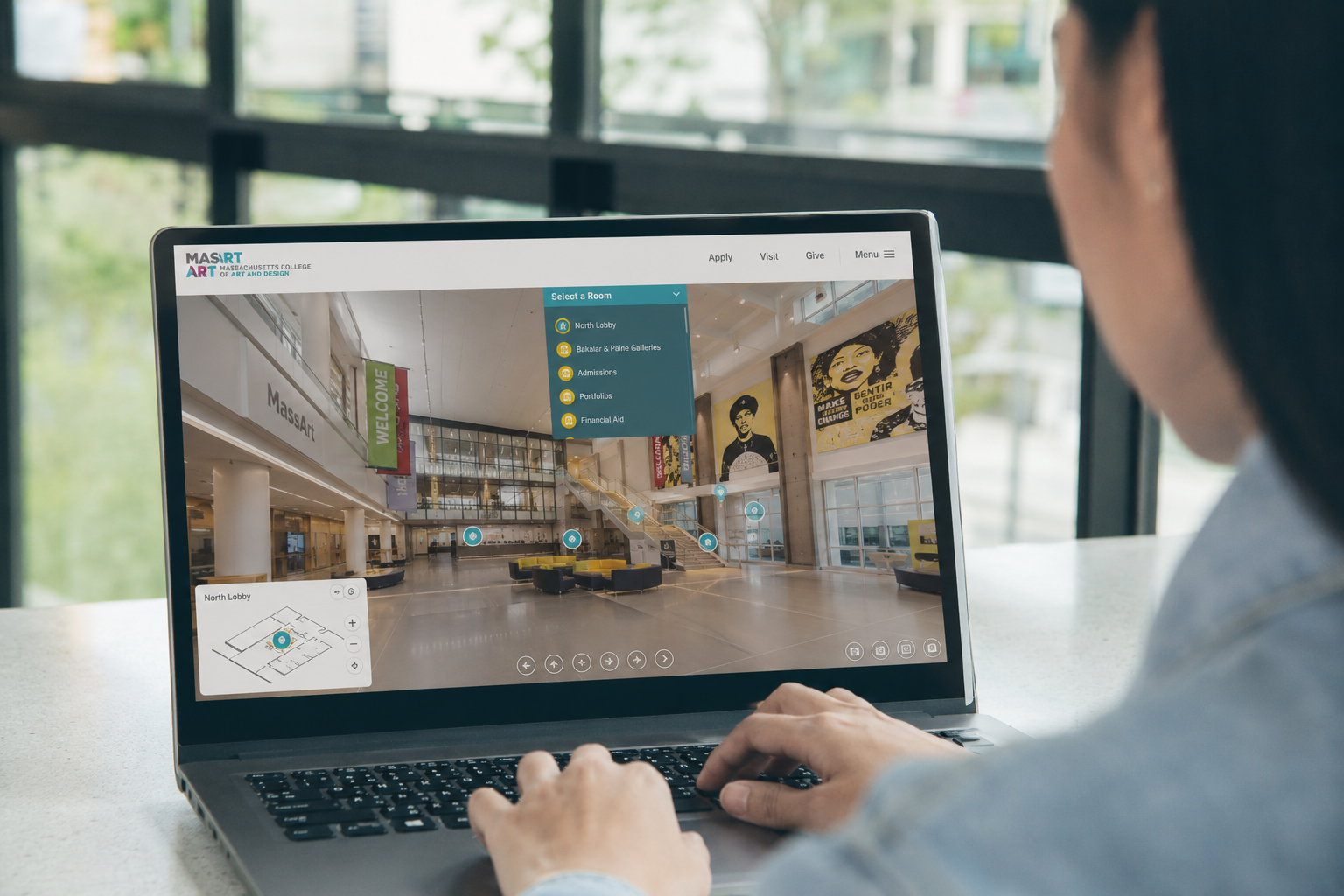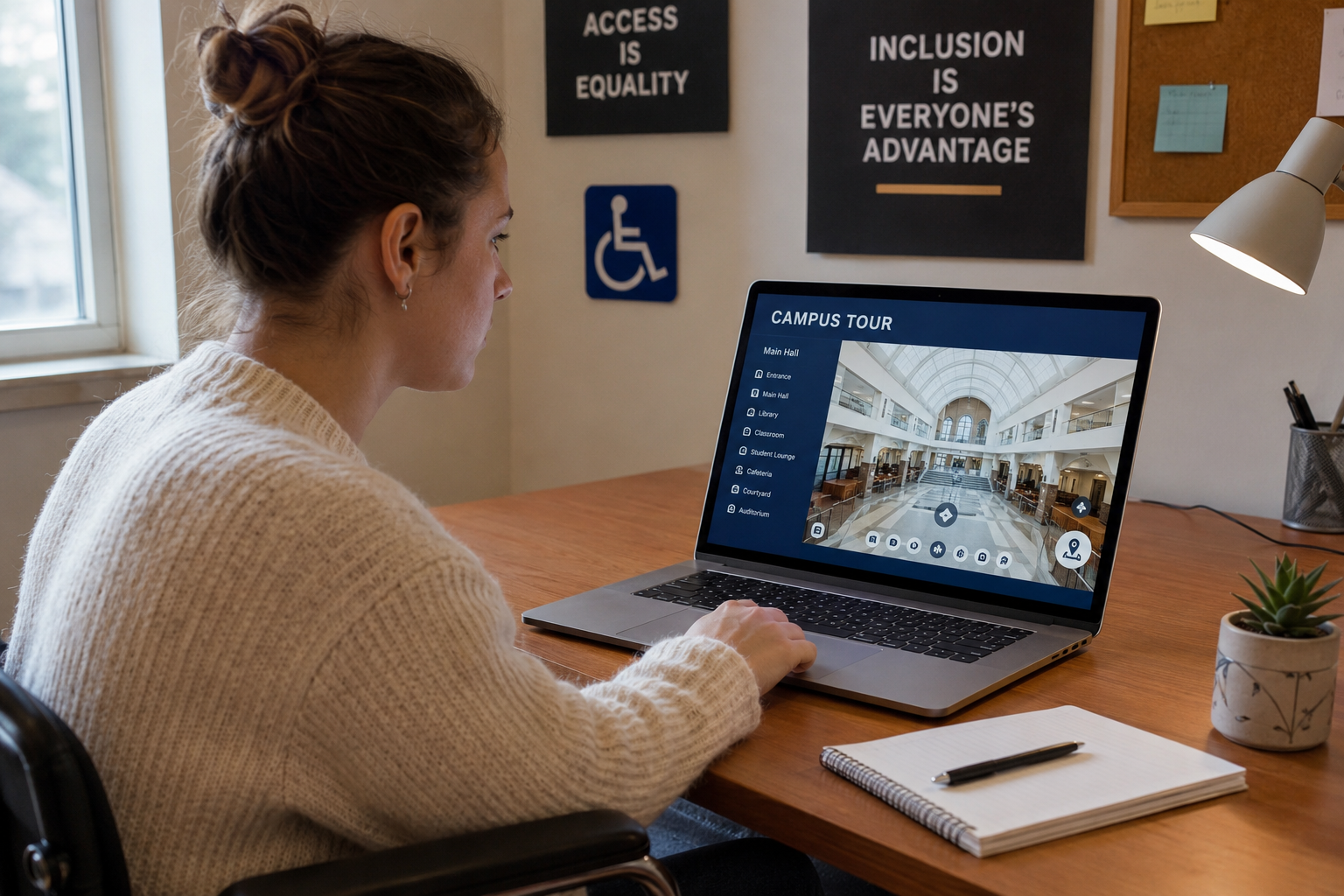








I have a virtual tour on my website and would like an audit.

I don't have a virtual tour yet, would love a demo to see how it works.

Introduction
For many prospective students, choosing a school or university is a decision made without ever physically visiting the campus.
Distance, cost, visa limitations, and time constraints often make in-person visits impractical—especially for international or out-of-state applicants. Even when visits are possible, they are limited to a single day, often guided and structured, leaving little room for independent exploration.
This creates a fundamental problem: students are expected to make high-stakes decisions about environments they don’t fully understand.
Virtual tours have emerged as a response to this gap—not as a marketing add-on, but as a tool for clarity. By allowing users to explore real spaces interactively, they provide a more complete understanding of campus environments, helping students feel more confident in their decisions.
This blog explores why virtual tours increase that confidence, focusing on how they function, how users experience them, and how they improve decision-making.
Key Takeaways
- Virtual tours allow students to independently explore campuses, reducing reliance on curated impressions
- Interactive navigation improves spatial understanding compared to static media
- Transparency in showcasing real environments builds trust and reduces uncertainty
- Multimedia elements (audio, hotspots, maps) provide context that supports informed decision-making
- Accessible exploration supports global and remote audiences equally
Why This Topic Matters?
Confidence in decision-making is not just about having information—it’s about understanding.
In education, this understanding is often tied to physical environments: classrooms, dorms, libraries, and social spaces. These are not easily communicated through brochures or rankings.
Virtual tours address this by:
- Making campuses accessible regardless of geography
- Allowing users to experience layout, scale, and atmosphere
- Providing context through interactive elements rather than static descriptions
Institutions increasingly use virtual tours not simply to attract attention, but to help prospective students make informed choices. When students can explore spaces at their own pace, they develop a clearer mental model of the environment—something traditional media struggles to provide.
This aligns with broader principles of accessibility, inclusion, and transparency in modern education.
How Interactive Exploration Builds Real Understanding
Moving From Passive Viewing to Active Exploration
Traditional media—photos and videos—present information in a fixed sequence. Virtual tours, by contrast, allow users to choose where to go and what to explore.
In a typical 360-degree virtual tour:
- Users navigate through real campus pathways
- They move between buildings and spaces using interactive controls
- They zoom in to examine details such as classrooms or facilities
This shift from passive viewing to active exploration changes how information is processed.
Instead of being shown a campus, students experience it.
Mass Interact’s approach to virtual tours emphasizes this interactivity, allowing users to “effortlessly explore your location through captivating 360 virtual tours” and access spaces with full control
Why This Builds Confidence
When users control the experience:
- They spend more time on areas that matter to them
- They form stronger mental maps of the environment
- They feel less dependent on curated narratives
This leads to a deeper sense of familiarity—one of the key drivers of confidence.
Spatial Clarity: Understanding the Campus Layout
The Importance of Spatial Awareness
A major source of uncertainty for prospective students is not knowing how a campus feels in terms of size, layout, and connectivity.
Virtual tours address this through:
- Realistic walking paths across campus
- Floor plans integrated into the experience
- Seamless transitions between spaces
Instead of isolated images, students see how spaces connect.
Real Use Case
A student exploring a university through a virtual tour can:
- Move from a lecture hall to nearby study areas
- Understand proximity between dorms and academic buildings
- Explore outdoor spaces and campus flow
This creates a coherent understanding of daily life—not just isolated highlights.
Mass Interact highlights this by offering “complete campus coverage” and “realistic walking paths” that allow users to experience every corner of a campus environment.
Why This Builds Confidence
When students understand how spaces connect:
- They can imagine themselves navigating the campus
- They feel more prepared for real-life experiences
- The environment becomes predictable rather than uncertain
Transparency and Trust Through Real Environments
Showing, Not Telling
Virtual tours reduce reliance on selective storytelling.
Instead of describing facilities, institutions can:
- Present real environments in high-resolution 360-degree views
- Allow users to inspect details independently
- Avoid over-reliance on curated angles or staged visuals
Custom virtual tours often include high-resolution imagery that captures the “essence of your space,” allowing users to explore freely.
Why Transparency Matters
Students are increasingly cautious about marketing claims.
When they can:
- Explore spaces themselves
- Verify what they see
- Compare expectations with reality
They develop trust.
This trust directly influences confidence—because the decision is based on observed reality, not interpretation.
Context Through Interactive Information Layers
Beyond Visual Exploration
Modern virtual tours go beyond visuals by integrating:
- Clickable hotspots with additional information
- Embedded videos explaining facilities
- Audio narration guiding users through the experience
These elements provide context that static media cannot.
Example: Narrated Experiences
In narrated virtual tours:
- A voice explains the purpose of each space
- Historical or cultural context is provided
- Users receive guidance while maintaining control
This creates a balance between guided and self-directed exploration.
Why This Builds Confidence
Context reduces ambiguity.
Instead of wondering:
- “What is this building used for?”
- “How does this space fit into student life?”
Students receive clear explanations while exploring.
This combination of exploration + explanation leads to better-informed decisions.
Accessibility for Global and Remote Students
Breaking Geographic Barriers
One of the most significant advantages of virtual tours is accessibility.
Students can:
- Explore campuses from any location
- Access tours on mobile or desktop devices
- Revisit spaces multiple times at their convenience
Virtual tours “bring your school to their screens with full access,” allowing students to engage regardless of physical distance.
Why Accessibility Builds Confidence
Confidence often comes from familiarity—and familiarity requires exposure.
Virtual tours allow repeated exposure:
- Students can revisit spaces before making decisions
- Families can explore together remotely
- International applicants can evaluate options without travel
This equalizes access and reduces decision anxiety.
Comparison: Virtual Tours vs Photos
Photos: Fragmented Understanding
Photos provide:
- High-quality visuals
- Selected highlights
- Limited context
But they lack:
- Continuity between spaces
- Depth and navigation
- User control
Virtual Tours: Continuous Exploration
Virtual tours provide:
- A connected view of the environment
- The ability to move between spaces
- A sense of scale and layout
Impact on Decision-Making
Photos answer: “What does this place look like?”
Virtual tours answer: “What is it like to be here?”
This difference is critical for confidence.
Comparison: Virtual Tours vs Videos
Videos: Guided but Fixed
Videos offer:
- Storytelling and narrative
- Controlled pacing
- Limited interaction
However:
- Users cannot explore freely
- Important details may be skipped
- Viewing is passive
Virtual Tours: User-Led Experience
Virtual tours allow:
- Non-linear exploration
- Focus on individual priorities
- Repeated visits to specific areas
Impact on Decision-Making
Videos create impressions.
Virtual tours create understanding.
For prospective students, understanding is what drives confident choices.
Real Engagement and Emotional Connection
Virtual tours are not only informational—they are experiential.
They create:
- A sense of presence within the environment
- Emotional familiarity with the campus
- Early connection with the institution
Feedback from institutions shows that virtual tours help students “see and feel [the campus] more richly from afar,” reinforcing emotional engagement.
This emotional layer complements rational decision-making, strengthening confidence.
FAQs
No. They complement them. Virtual tours provide early-stage understanding and help students decide whether an in-person visit is necessary.
Yes. They are particularly valuable for international students who may not have the opportunity to visit campuses physically.
They provide spatial clarity, real context, and interactive exploration—allowing students to make decisions based on understanding rather than assumptions.
Features like interactive navigation, high-resolution visuals, hotspots, and guided narration enhance both usability and comprehension.
Yes. Most modern virtual tours are designed to be mobile-friendly, allowing access across devices.
Final Thoughts
Confidence in choosing a school or university comes from clarity—clarity about the environment, the experience, and the fit.
Virtual tours contribute to this clarity by:
- Making spaces accessible
- Allowing independent exploration
- Providing context through interaction
- Building trust through transparency
They are not simply digital representations of campuses—they are tools that help students move from uncertainty to understanding.
As institutions continue to serve increasingly global audiences, virtual tours will remain central to how students evaluate and connect with educational spaces.
I have a virtual tour on my website and would like an audit.
I don't have a virtual tour yet, would love a demo to see how it works.